

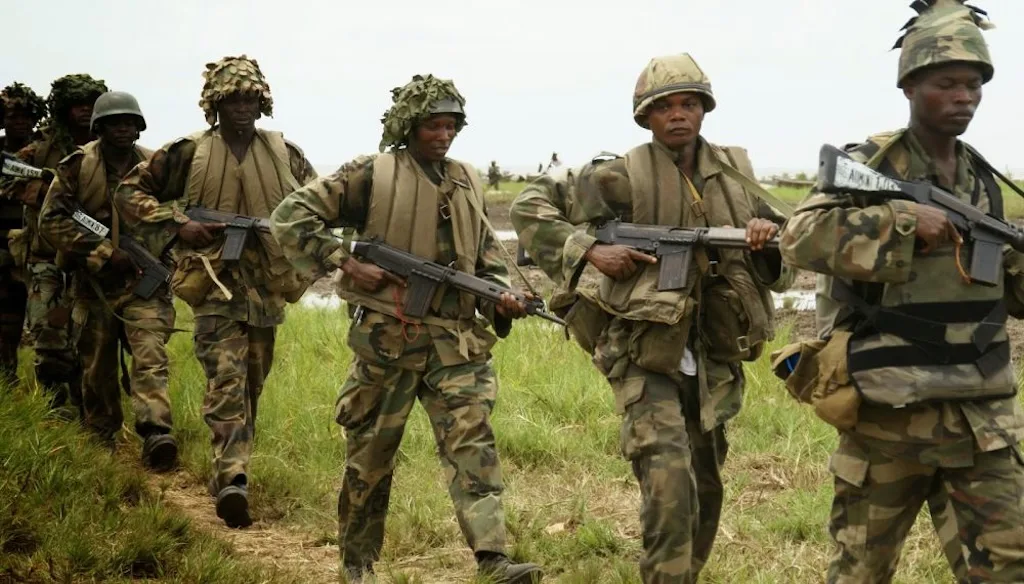
The Nigerian Army's recent clash with IPOB fighters in Enugu State has raised concerns about the escalating violence in the region. The army said the clash occurred when its troops raided a hideout of suspected IPOB members and its armed militant wing, the Eastern Security Network. The incident resulted in three soldiers being injured, and it's unclear if there were any casualties on the IPOB side. The Nigerian government has been struggling to contain the IPOB's separatist movement, which has been gaining momentum in recent years. The group's leader, Nnamdi Kanu, has been a vocal advocate for the creation of an independent Biafran state.
The IPOB's movement has been fueled by a sense of marginalization and exclusion among the Igbo people, who feel that they have been neglected by the Nigerian government. The group's demands for independence have been met with resistance from the government, which has accused the IPOB of being a terrorist organization. The Nigerian Army has been deploying troops to the region to quell the unrest, but the situation remains volatile. The clash between the army and IPOB fighters is a reminder that the conflict is far from over. The Nigerian government needs to address the underlying issues driving the IPOB's movement, or risk further escalation of the violence.
The Enugu State incident is not an isolated event, as there have been several clashes between the Nigerian Army and IPOB fighters in recent months. The IPOB has been using guerrilla tactics to attack army troops and police stations, and the government has responded with force. The conflict has resulted in the loss of lives and property, and it's affecting the livelihoods of innocent civilians. The international community has been calling for restraint and dialogue, but the situation remains tense. The Nigerian government needs to find a way to address the IPOB's grievances and find a peaceful solution to the conflict.
The IPOB's movement has been compared to other separatist movements around the world, such as the Catalan independence movement in Spain. However, the Nigerian government has been firm in its opposition to the IPOB's demands, and it's unlikely that the group will achieve its goal of independence anytime soon. The conflict is complex, and it's driven by a range of factors, including economic, political, and cultural issues. The Nigerian government needs to take a holistic approach to addressing the IPOB's grievances, rather than just relying on military force.
Key Facts
- The clash between the Nigerian Army and IPOB fighters occurred in Enugu State.
- Three soldiers were injured in the clash.
- The IPOB is a separatist group seeking independence for the Igbo people in southeastern Nigeria.
- The group's leader, Nnamdi Kanu, has been a vocal advocate for the creation of an independent Biafran state.
- The Nigerian government has accused the IPOB of being a terrorist organization.
- The conflict has resulted in the loss of lives and property.
- The international community has been calling for restraint and dialogue.
History of the IPOB
The IPOB was formed in 2014, and it's been gaining momentum ever since. The group's leader, Nnamdi Kanu, has been a key figure in the movement, and he's been instrumental in mobilizing support for the IPOB's cause. The group's demands for independence are driven by a sense of marginalization and exclusion among the Igbo people, who feel that they have been neglected by the Nigerian government. The IPOB has been using a range of tactics to achieve its goals, including protests, boycotts, and armed attacks. The Nigerian government has responded to the IPOB's movement with force, and the conflict has resulted in the loss of lives and property.
The IPOB's movement has been influenced by the history of the Igbo people, who have been subject to discrimination and marginalization in Nigeria. The group's demands for independence are driven by a desire to create a separate state where the Igbo people can govern themselves and determine their own destiny. The IPOB has been compared to other separatist movements around the world, such as the Scottish National Party in the UK. However, the Nigerian government has been firm in its opposition to the IPOB's demands, and it's unlikely that the group will achieve its goal of independence anytime soon.
The IPOB's movement has been marked by controversy, and the group has been accused of being a terrorist organization. The Nigerian government has banned the IPOB, and it's been cracking down on the group's activities. However, the IPOB has continued to operate, and it's been using guerrilla tactics to attack army troops and police stations. The conflict has resulted in the loss of lives and property, and it's affecting the livelihoods of innocent civilians. The international community has been calling for restraint and dialogue, but the situation remains tense.
The Nigerian Government's Response
The Nigerian government has been responding to the IPOB's movement with force, and it's been deploying troops to the region to quell the unrest. The government has accused the IPOB of being a terrorist organization, and it's been cracking down on the group's activities. However, the IPOB has continued to operate, and it's been using guerrilla tactics to attack army troops and police stations. The conflict has resulted in the loss of lives and property, and it's affecting the livelihoods of innocent civilians. The Nigerian government needs to find a way to address the IPOB's grievances and find a peaceful solution to the conflict.
The Nigerian government's response to the IPOB's movement has been criticized by human rights groups, who have accused the government of using excessive force. The government has been accused of violating the rights of IPOB members and sympathizers, and it's been criticized for its heavy-handed approach to the conflict. The government needs to take a more nuanced approach to the conflict, and it needs to address the underlying issues driving the IPOB's movement. The government should engage in dialogue with the IPOB and other stakeholders, and it should work to find a peaceful solution to the conflict.
The Nigerian government's response to the IPOB's movement has been influenced by the country's history of conflict and instability. Nigeria has been plagued by ethnic and religious tensions, and it's been struggling to contain the Boko Haram insurgency in the north. The government has been using military force to respond to the IPOB's movement, but it's unlikely that this approach will resolve the conflict. The government needs to take a more holistic approach to the conflict, and it needs to address the underlying issues driving the IPOB's movement.
The International Community's Role
The international community has been calling for restraint and dialogue in the conflict between the Nigerian government and the IPOB. The United Nations and other organizations have been urging the parties to engage in peaceful negotiations, and to find a solution to the conflict that respects the rights of all parties. The international community has been providing humanitarian assistance to those affected by the conflict, and it's been working to promote peace and stability in the region.
The international community's role in the conflict is crucial, and it can help to promote a peaceful solution. The international community can provide a platform for dialogue and negotiation, and it can help to facilitate a peaceful resolution to the conflict. The international community can also provide humanitarian assistance to those affected by the conflict, and it can help to promote economic development and stability in the region.
The conflict between the Nigerian government and the IPOB is a complex issue that requires a nuanced and multifaceted approach. The international community can play a crucial role in promoting peace and stability in the region, and it can help to facilitate a peaceful resolution to the conflict. The international community should continue to call for restraint and dialogue, and it should work to promote a solution that respects the rights of all parties.
The Way Forward
The conflict between the Nigerian government and the IPOB is a complex issue that requires a nuanced and multifaceted approach. The government needs to take a more holistic approach to the conflict, and it needs to address the underlying issues driving the IPOB's movement. The government should engage in dialogue with the IPOB and other stakeholders, and it should work to find a peaceful solution to the conflict. The international community can play a crucial role in promoting peace and stability in the region, and it can help to facilitate a peaceful resolution to the conflict.
The way forward is unclear, but it's certain that the conflict will continue to escalate unless the parties engage in meaningful dialogue. The Nigerian government needs to take a more nuanced approach to the conflict, and it needs to address the underlying issues driving the IPOB's movement. The IPOB needs to renounce violence and engage in peaceful negotiations, and it needs to work to find a solution that respects the rights of all parties. The international community can play a crucial role in promoting peace and stability in the region, and it can help to facilitate a peaceful resolution to the conflict.
The conflict between the Nigerian government and the IPOB is a reminder that the legacy of colonialism and imperialism continues to shape the modern world. The conflict is driven by a range of factors, including economic, political, and cultural issues. The Nigerian government needs to take a more nuanced approach to the conflict, and it needs to address the underlying issues driving the IPOB's movement. The IPOB needs to renounce violence and engage in peaceful negotiations, and it needs to work to find a solution that respects the rights of all parties. The international community can play a crucial role in promoting peace and stability in the region, and it can help to facilitate a peaceful resolution to the conflict.
Conclusion
The conflict between the Nigerian government and the IPOB is a complex issue that requires a nuanced and multifaceted approach. The government needs to take a more holistic approach to the conflict, and it needs to address the underlying issues driving the IPOB's movement. The IPOB needs to renounce violence and engage in peaceful negotiations, and it needs to work to find a solution that respects the rights of all parties. The international community can play a crucial role in promoting peace and stability in the region, and it can help to facilitate a peaceful resolution to the conflict. The way forward is unclear, but it's certain that the conflict will continue to escalate unless the parties engage in meaningful dialogue.
The conflict between the Nigerian government and the IPOB is a reminder that the legacy of colonialism and imperialism continues to shape the modern world. The conflict is driven by a range of factors, including economic, political, and cultural issues. The Nigerian government needs to take a more nuanced approach to the conflict, and it needs to address the underlying issues driving the IPOB's movement. The IPOB needs to renounce violence and engage in peaceful negotiations, and it needs to work to find a solution that respects the rights of all parties. The international community can play a crucial role in promoting peace and stability in the region, and it can help to facilitate a peaceful resolution to the conflict.
The conflict between the Nigerian government and the IPOB is a complex issue that requires a nuanced and multifaceted approach. The government needs to take a more holistic approach to the conflict, and it needs to address the underlying issues driving the IPOB's movement. The IPOB needs to renounce violence and engage in peaceful negotiations, and it needs to work to find a solution that respects the rights of all parties. The international community can play a crucial role in promoting peace and stability in the region, and it can help to facilitate a peaceful resolution to the conflict. The way forward is unclear, but it's certain that the conflict will continue to escalate unless the parties engage in meaningful dialogue.