

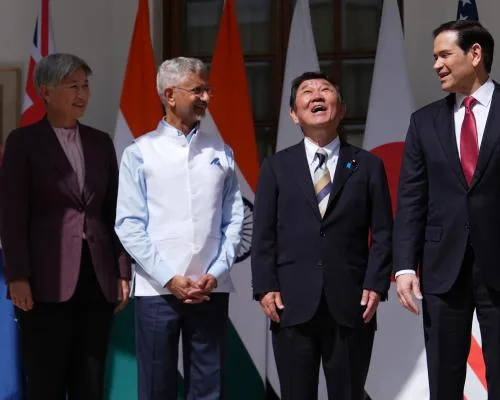
The Quad countries
- Australia, the United States, India, and Japan - have announced a new initiative to build surveillance capabilities and critical minerals cooperation, in a move to counter China's growing influence in the region. This move comes after a meeting in New Delhi, where the Quad ministers expressed their concerns about the South China Sea and East China Sea. They're concerned about China's actions in these areas, and they're taking steps to address this issue.
US Secretary of State Marco Rubio took part in the meeting and stated that the Quad comprised countries “who share strong values – strong, vibrant democracies” and have “many aligned interests”. He didn't hesitate to emphasize the importance of these values. The Quad said in a joint statement that members would together mobilise US$20 billion in government and private money to strengthen critical mineral supply chains. This investment is expected to have a major impact on the region's economy.
The Quad also announced that they would work together on two maritime initiatives. One initiative combines their surveillance capabilities. Another initiative will provide enhanced real-time information to commercial traffic at sea. Australia’s foreign minister, Penny Wong, said the Quad was cooperating on assisting port development in Fiji – a key island nation in the South Pacific, where China has made a concerted push for greater influence. They're working together to help Fiji develop its ports.
“We recognise our obligation – our responsibility – to provide real choices, particularly as strategic circumstances in our region are deteriorating,” Wong said. The Quad doesn't want to leave countries in the region without options. The Quad in a statement also set a goal of connecting South Pacific islands through undersea cables by the end of the year. They want to integrate these islands economically with the four democracies rather than China. This will help promote economic cooperation and stability in the region.
The Chinese foreign ministry spokeswoman, Mao Ning, reacted to the Quad meeting by stating that cooperation “should not be directed against any third party”. She also mentioned that they don't support exclusive cliques or bloc confrontations. The Quad ministers, however, were clear in their joint statement that they were “seriously concerned” about the South China Sea and East China Sea. They're opposed to “destabilising or unilateral actions” – a clear reference to Beijing. The Quad ministers won't tolerate actions that destabilize the region.
The Quad's initiative is a significant move in the region, especially considering the growing tensions between China and the Quad countries. The US$20 billion investment in critical mineral supply chains is expected to boost the region's economy. It's a major investment that will have a significant impact. The initiative also highlights the Quad countries' commitment to working together to counter China's influence. They're committed to promoting peace and stability in the region.
The meeting in New Delhi was attended by top officials from the Quad countries, including US Secretary of State Marco Rubio and Australia’s foreign minister, Penny Wong. The officials discussed various issues, including the South China Sea and East China Sea. They expressed their concerns about China's growing influence in the region. They're worried about China's actions and their impact on the region. The officials also discussed ways to counter China's influence and promote economic cooperation.
The Quad's initiative is not just limited to the South Pacific region. The countries are also working together on various other projects. They're developing undersea cables and enhancing real-time information to commercial traffic at sea. These projects are expected to have a significant impact on the region's economy. They'll help to counter China's influence and promote economic integration and cooperation. The Quad countries are committed to working together to achieve these goals.
The Chinese government has been trying to increase its influence in the South Pacific region, and the Quad countries' initiative is seen as a counter to this move. The Quad countries are committed to working together to provide real choices to the countries in the region. They want to promote economic integration and cooperation. The Quad countries won't let China dominate the region without a challenge. They're taking steps to counter China's influence and promote peace and stability.
The Quad's initiative is a significant development in the region, and it will be interesting to see how China reacts to this move. The Quad countries are committed to working together to promote peace and stability in the region. They're committed to countering China's growing influence. The Quad countries won't back down from this challenge. They'll continue to work together to achieve their goals.
Key Facts
- The Quad countries have announced a new initiative to build surveillance capabilities and critical minerals cooperation.
- The initiative includes a US$20 billion investment in critical mineral supply chains.
- The Quad countries are working together on two maritime initiatives – one that combines their surveillance capabilities, and another that will provide enhanced real-time information to commercial traffic at sea.
- The Quad is cooperating on assisting port development in Fiji.
- The Quad has set a goal of connecting South Pacific islands through undersea cables by the end of the year.
The Quad countries' initiative is a significant move in the region, and it will have a major impact on the region's economy and politics. The initiative highlights the Quad countries' commitment to working together to counter China's influence and to promote peace and stability in the region. It's a significant development that will shape the region's future. The Quad countries are taking a strong stance against China's growing influence, and they're committed to achieving their goals. They won't let China dominate the region without a challenge.
The Quad countries will continue to work together to promote economic cooperation and stability in the region.