

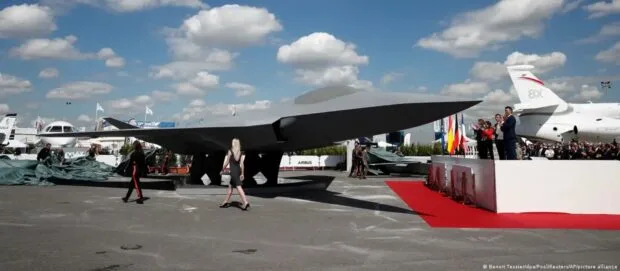
The Future Combat Air System (FCAS), Europe's biggest defense project, is facing significant challenges. Airbus, representing the German and Spanish side of the project, is open to restructuring the program. This could include a 'two-fighter solution', allowing France and Germany to develop separate combat aircraft while still cooperating on drones, sensors, and digital systems.
But what led to this point? The FCAS project was initially intended to create a joint next-generation fighter jet for European countries. However, years of political and industrial disputes have hindered progress. The project's complexity, combined with differing priorities among participating countries, has caused significant delays. It's clear that the project's complexity and the differing priorities haven't helped.
Airbus's suggestion of a two-fighter solution is a development that shows the company is willing to adapt to the changing landscape of European defense cooperation. The FCAS project isn't just about creating a new fighter jet; it's also about developing a network of interconnected systems that can share data in real-time. This network is crucial for the project's success.
'Keep dreaming': NATO chief says Europe can't defend itself without US. This statement highlights the challenges Europe faces in terms of defense. The FCAS project was supposed to be a step towards greater European defense autonomy. It was meant to reduce Europe's reliance on the US for defense.
The FCAS project has a long history, dating back to 2017 when Germany and France first announced their intention to collaborate on a new fighter jet. Since then, Spain has joined the project, and other European countries have expressed interest. However, the project's progress has been slow. The recent suggestion of a two-fighter solution is a sign that the project's original goals may not be achievable. They're still trying to find a way to make it work.
So, what does this mean for European defense? The FCAS project was supposed to be a symbol of European cooperation and a step towards greater defense autonomy. However, the current challenges facing the project raise questions about Europe's ability to develop and produce complex defense systems on its own. It's unclear if Europe can do it alone.
The two-fighter solution proposed by Airbus could be a way forward, but it also raises questions about the project's overall cost and effectiveness. Developing two separate fighter jets would likely be more expensive than creating a single joint project. The lack of a unified European approach to defense could create interoperability issues and reduce the project's overall value. This wouldn't be ideal for the project.
Yet, the FCAS project isn't just about defense; it's also about the future of European cooperation. The project's success or failure will have significant implications for the future of European integration and cooperation. If the project fails, it could undermine the credibility of European cooperation and create doubts about the ability of European countries to work together on complex projects. They won't be able to work together as easily.
And what about the role of the US in European defense? The NATO chief's statement highlights the fact that Europe still relies heavily on the US for its defense. The FCAS project was supposed to reduce this dependence, but its current challenges raise questions about Europe's ability to defend itself without US support. It's clear that Europe can't defend itself without the US, at least not yet.
In terms of specific numbers, the FCAS project is estimated to cost hundreds of billions of euros. The exact cost is difficult to determine, but it's clear that the project is one of the most expensive defense projects in European history. The project's cost and complexity have created significant challenges. The recent suggestion of a two-fighter solution is a sign that the project's original goals may not be achievable. They're not giving up, though.
The FCAS project's key facts are:
- The FCAS project is Europe's biggest defense project.
- Airbus has suggested a two-fighter solution.
- The project's cost is estimated to be hundreds of billions of euros.
- The project's progress has been slow due to political and industrial disputes.
- The NATO chief has stated that Europe can't defend itself without US support.
The future of the FCAS project is uncertain, and its success or failure will have significant implications for European defense and cooperation. As the situation continues to unfold, it's clear that the FCAS project is a complex and challenging undertaking that requires significant investment and cooperation from European countries. It won't be easy, but they're trying to make it work. The project's outcome will be crucial for Europe's defense and cooperation.