

The US conducted strikes on Monday, May 25, in southern Iran, targeting boats attempting to lay mines and missile launch sites. It's led to a rise in oil prices, with Brent crude futures increasing by more than 1% in early Asian trade to $97.32 a barrel.
The US strikes come as Iran's top negotiator and foreign minister are in Doha for talks with Qatar's prime minister on a potential deal with the US to end the war. The US has played down hopes for an imminent breakthrough, and the new strikes have raised concerns about the prospects for a peace deal. They're concerned that the talks won't lead to a breakthrough, and the situation won't improve soon.
Joseph Capurso, a strategist at Commonwealth Bank of Australia, expressed skepticism about the potential deal, saying: I'm a bit sceptical… We keep being told there's a deal that's near, but what does the deal look like? That's what's really important. When's the Strait of Hormuz going to open… There's a lot we don't know. He didn't specify what he thinks the deal should include, but he's worried that it won't address the key issues.
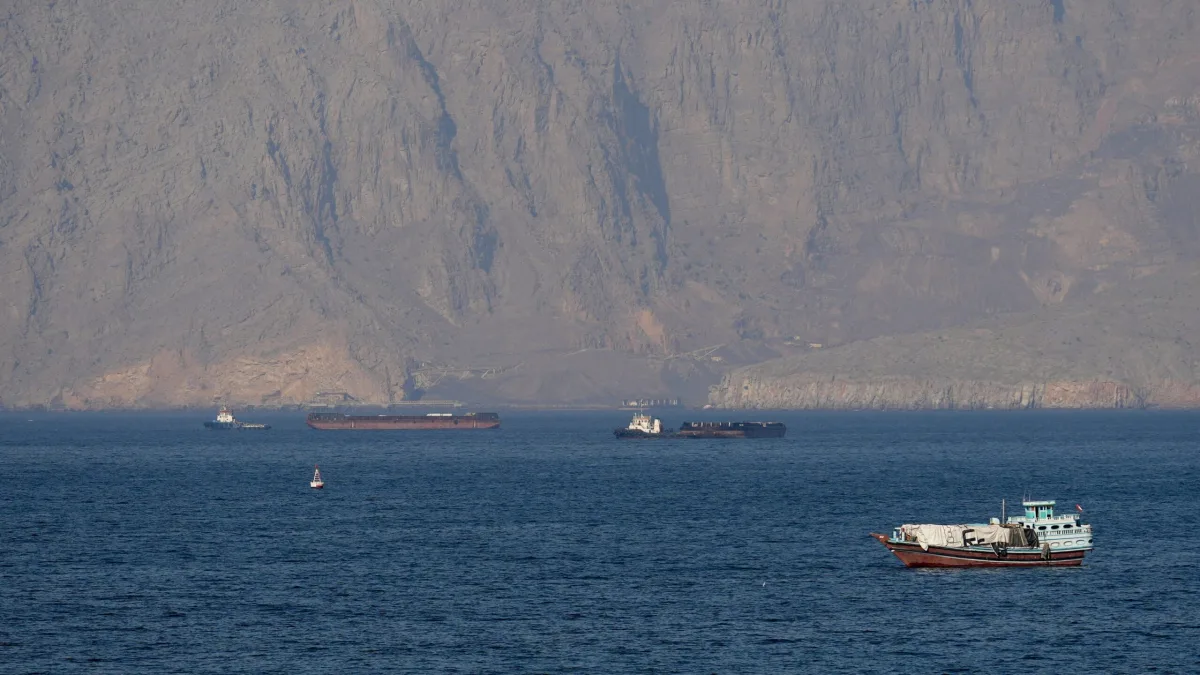
The Strait of Hormuz is a critical waterway for oil exports, and its closure could have significant implications for the global economy. The Nikkei newspaper reported that both parties are discussing a plan to open the Strait of Hormuz about 30 days after reaching a deal to end hostilities. This plan, if implemented, could help reduce tensions in the region and improve the flow of oil exports.
The US dollar has steadied on Tuesday on renewed safe-haven demand, though it remains some distance away from a six-week peak hit last week. The euro fell 0.06% to $1.1636, while sterling eased to $1.3498. Against the yen, the dollar was flat at 158.95. The dollar's stability is a sign that investors are cautious, but they don't expect a major downturn in the economy.
The yield on the two-year US Treasury note was last little changed at 4.0612%, while the 10-year yield fell to 4.5024%. Eric Robertsen, Standard Chartered's head of global research and chief strategist, said: We're likely to see periodic yield retracements on occasions when geopolitical risks subside, but inflation and fiscal risks are likely to be more sustained. He thinks that the economy will face challenges, and investors won't see a quick recovery.
Spot gold was down 0.5% at $4,545.90 an ounce. Stock markets were mixed, with MSCI's broadest index of Asia-Pacific shares outside Japan advancing 0.8%, while Japan's Nikkei index shed 0.2%. Nasdaq futures trimmed earlier gains to trade 0.9% higher, while S&P 500 futures rose 0.68%. The market's reaction is cautious, as investors don't know what to expect from the situation in the Middle East.
The situation in the Middle East remains volatile, with the potential for further escalation in the conflict. The US strikes on Monday are a reminder that the situation is complex, and a peace deal may be difficult to achieve. It's clear that the US and Iran won't reach a deal easily, and the conflict will continue to affect the global economy.
- Oil prices rose by more than 1% in early Asian trade to $97.32 a barrel
- The US conducted strikes on Monday against targets in southern Iran
- Iran's top negotiator and foreign minister are in Doha for talks with Qatar's prime minister
- The US has played down hopes for an imminent breakthrough in the talks
- The Strait of Hormuz is a critical waterway for oil exports
In the Philippines, the rise in oil prices could have significant implications for the economy. The country is heavily reliant on imported oil, and any increase in prices could lead to higher costs for consumers and businesses. The Philippine government has been working to reduce its reliance on imported oil, but the country still remains vulnerable to fluctuations in the global oil market. They're trying to diversify their energy sources, but it's a challenging task.
As the situation in the Middle East continues to unfold, the conflict will impact the global economy. The rise in oil prices will have far-reaching consequences for countries around the world. It's likely that the situation will get worse before it gets better, and the global economy will face challenges. The world won't see a quick recovery, and investors will have to be patient.