

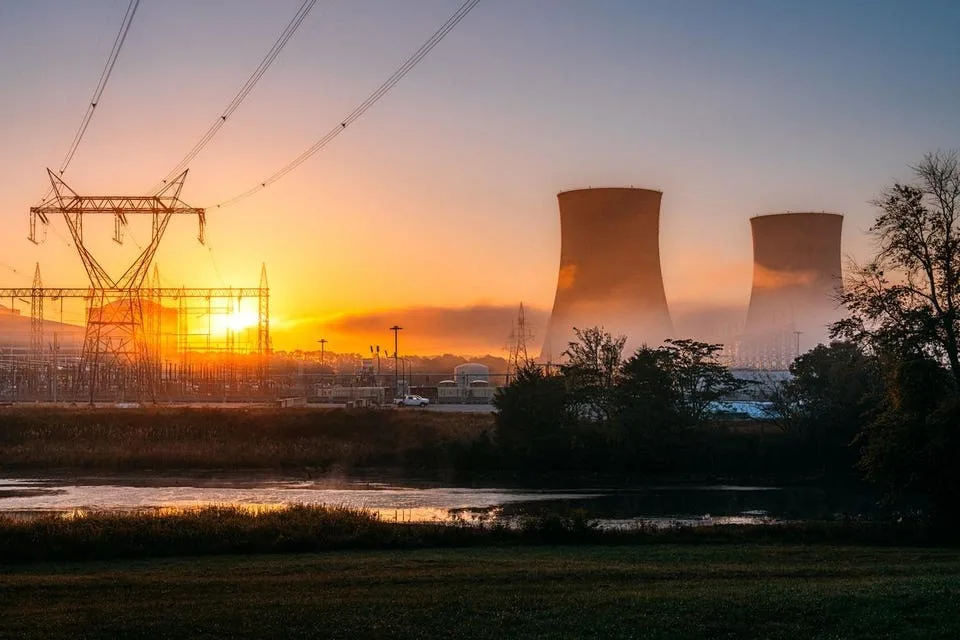
The Trump administration is hastening measures to spur domestic production of enriched uranium to counteract a full ban on Russian imports that will take effect in 2028. This urgent need arises from the fact that American nuclear power plants rely on imported uranium concentrate (U3O8) for nearly all of their fuel. They don't produce enough domestically to meet their needs.
Andrea Kock, director of the commission's Office of Nuclear Materials Safety and Safeguards, echoed this sentiment. "The ban on the use of Russian uranium, which the chairman mentioned, goes into full effect in 2028, and has resulted in an urgent need to increase the domestic capacity for enriched uranium." She didn't mention any potential solutions, but it's clear that something needs to be done.
The U.S. Nuclear Regulatory Commission recently discussed the need to curb domestic nuclear power plants' reliance on imported uranium during a May 7 strategic programmatic meeting. Chairman Ho K. Nieh said "the United States depends too heavily on foreign uranium and enrichment, and that has to change." It's a problem that won't fix itself, so they're taking steps to address it.
In 2024, President Joe Biden signed into law H.R.1042: Prohibiting Russian Uranium Imports Act. Imports of unirradiated low-enriched uranium and natural uranium produced in the Russian Federation or by a Russian entity are against the law unless the Secretary of Energy grants a waiver. This law won't allow for many exceptions, so it's crucial that the US develops its own uranium production.
The problem is that American nuclear power plants rely on imported uranium concentrate (U3O8) for nearly all of their fuel. This heavy reliance was illustrated by the U.S. Energy Information Administration figures for 2023, which showed that U.S. nuclear generators needed to buy 99% of their U3O8 from other countries, namely Canada, Australia, Russia, Kazakhstan, and Uzbekistan. They can't produce enough uranium domestically to meet their needs, so they have to import it.
Both the U.S. Department of Energy and the NRC have been taking multiple actions to facilitate the development of more domestic nuclear power and encourage investments in strengthening the fuel supply chain. The NRC announced May 21 that it is reviewing a request for "a major new uranium enrichment facility" in Tennessee, which would alleviate the need for imports. This facility would be a significant step towards reducing the US's reliance on foreign uranium.
The facility "will use gas centrifuge technology to produce low-enriched uranium for commercial nuclear power plants, reducing U.S. dependence on foreign uranium enrichment, a critical vulnerability that policymakers and industry leaders have flagged as a national energy security concern," according to the NRC. It's a complex process, but the end result would be a more secure energy supply.
"NRC is safely enabling America's efforts to reduce U.S. dependency on foreign enrichment," Nieh said. "Credible, predictable, and timely safety reviews—this is how NRC supports American leadership in nuclear energy." The NRC is committed to making this process as smooth as possible.
Orano Enrichment USA LLC is asking for a license to build and operate a new uranium enrichment facility called Project IKE, near Oak Ridge. It's a big project, but it could make a significant difference in the US's energy security.
In January, DOE revealed it would invest $2.7 billion to bolster American enrichment services during the next 10 years. Secretary of Energy Chris Wright announced that grants have been awarded for low-enriched uranium and high-assay low-enriched uranium (HALEU) projects. This investment will help to stimulate the development of domestic uranium production.
The DOE's National Nuclear Security Administration recently hailed Japan's transfer of 1.7 metric tons of HALEU as the largest single international shipment of uranium to the U.S. in NNSA's history. It's a significant achievement, and it shows that the US is making progress in its efforts to reduce its reliance on foreign uranium.
"NNSA is breaking records with rapid approvals and decision-making to support America's nuclear industry," Administrator Brandon Williams noted in a press statement May 7. The NNSA is working hard to facilitate the development of domestic nuclear power.
Commercial nuclear power reactors currently provide 20% of the U.S. energy supply each year. The joint NNSA announcement was made by Japan's Ministry of Education, Culture, Sports, Science, and Technology and the Japan Atomic Energy Agency. It's a significant contribution to the US's energy mix.
"Through this partnership with Japan, we are fueling the next generation of nuclear power, and solidifying America's energy dominance," remarked Dr. Matthew Napoli, NNSA's deputy administrator of Defense Nuclear Nonproliferation. The partnership is a key part of the US's efforts to reduce its reliance on foreign uranium.
The DOE heralded its accomplishments within the last year to unleash more nuclear power in the U.S. energy mix. It cited four executive orders issued by Trump to promote the nuclear energy industry. The orders are designed to stimulate the development of domestic nuclear power, and they're having a positive impact.
"Next-generation reactor designs are moving toward key tests with impressive speed," the DOE noted. "Licensing for new reactors has been streamlined." The process is becoming more efficient, and that's good news for the US's energy security.
"Our nuclear fuel supply is being reinforced to meet our future energy demands," the DOE said. "Retired nuclear plants are on target to restart, and utilities are gearing up to boost the power output of existing plants." It's a complex process, but the end result will be a more secure energy supply.
The DOE summed up the administration's focus on what it calls "America's nuclear energy renaissance" and underscored that the momentum continues. The US is making progress in its efforts to reduce its reliance on foreign uranium, and that's a positive development.
Key Facts
- The US will ban Russian uranium imports by 2028
- 99% of US uranium concentrate is currently imported
- The DOE will invest $2.7 billion in American enrichment services
- Japan transferred 1.7 metric tons of HALEU to the US
- A new uranium enrichment facility may be built in Tennessee