

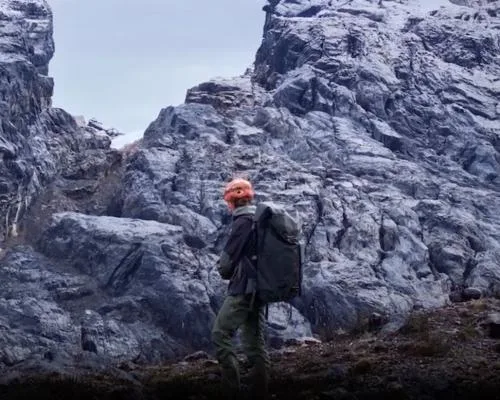
A Vanishing Act in the Tropics
Deep in the heart of West Papua, a rugged, disputed territory on the island of New Guinea, the last tropical glaciers in Oceania are gasping for air. These ice sheets, known locally as ‘eternal snow’, have been the stuff of legend for generations. They're now practically ghosts of their former selves. A recent expedition led by the Danish explorer Klaus Thymann has confirmed the worst: they've shrunk by 95% since 2002. This isn't just a bit of melting; it's a complete wipeout of a geological landmark that survived for centuries until we decided to crank up the planet's thermostat.
“The ice will be gone: it’s not a question of if, it’s a question of when. And ‘when’ is coming very, very soon.”
Klaus Thymann, the founder of the environmental charity Project Pressure, didn't hold back when describing the scene. After hacking through dense rainforests and dodging persistent, thick tropical rain to reach Puncak Jaya, his team used high-end drones to map what remains. They found themselves witnessing what he calls “planetary destruction on fast-forward.” It’s a sobering thought that humanity has managed to dismantle in a few decades what nature spent thousands of years building.
Data Points of a Dying Mountain
- The glaciers have lost 97% of their total mass between 1980 and 2024.
- Four of the original six glaciers have already vanished completely.
- Research indicates a 99% decrease in surface area since 1850.
- Global temperatures have climbed 1.4C since pre-industrial times, driving this melt.
- Experts predict the final remnants will be gone by the end of this decade.
Francine Hematang, a lead researcher at Papua University’s forestry faculty, described the loss as “deeply saddening” for her region. The geography of the area makes monitoring a logistical nightmare. Cloud cover and shadows from the jagged terrain constantly hide the ice from traditional satellites. David Ibel, a researcher at Friedrich-Alexander-University Erlangen-Nürnberg, explained that drone surveys are now our only reliable way to document the end of the line. His team combined satellite imagery and digitized old maps to track the 65% loss that has occurred just since their last major survey in 2018.
Technology as a Digital Ark
The expedition wasn't just about watching the ice disappear; they were on a mission to build a ‘visual Noah’s ark.’ By creating hyper-accurate 3D models using technology from firms like Trimble and Pix4D, they're saving a digital copy for the grandkids who won't ever see the real thing. It’s a grim task, knowing that the real, physical beauty of the Puncak Jaya glaciers won't be retrievable for hundreds of years. The region is already sensitive to El Niño weather patterns, which were particularly nasty in 2023-24. These patterns make the ice’s position even more precarious.
This isn't just about one mountain in Indonesia. The disappearance of these glaciers acts as a canary in the coal mine for the rest of the world. Scientists project that even with our best efforts to slash emissions, a quarter of the world’s glaciers will be gone by 2100. That’s a massive blow to food security and drinking water for millions. We're living through a time where we're literally watching our history and our environmental safeguards evaporate.
This leaves us with nothing but 3D models and an uncomfortable conversation about how we let it happen.