

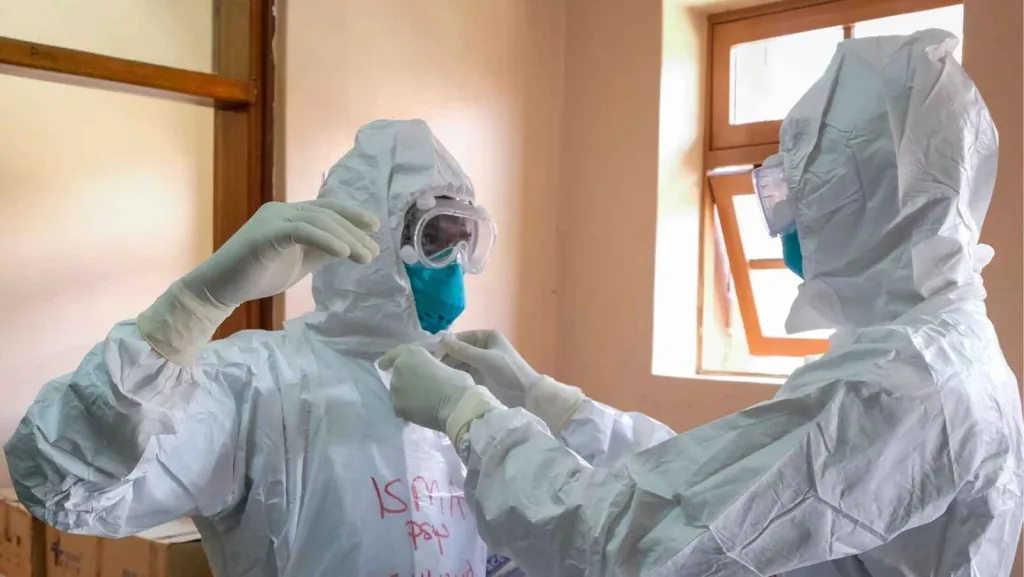
Governments and global health partners have promised $498.8 million to combat the Bundibugyo Ebola virus outbreak. This funding, announced during a high-level ministerial meeting on May 26, 2026, aims to stop a strain that’s already claimed 220 lives in Central Africa.
Jean Kaseya, the Director-General of the Africa Centres for Disease Control and Prevention (Africa CDC), broke the news on X. He framed the financial package as a necessary act of collective responsibility to secure the continent’s health. The money will coordinate rapid response operations across the affected nations and those at high risk of the virus spreading further.
"At the moment, the epidemic is outpacing us," admitted Tedros Adhanom Ghebreyesus, the Director-General of the World Health Organisation (WHO).
This outbreak is dangerous because the Bundibugyo strain is one of the rarest forms of the virus known to infect humans. Scientists have only documented two prior instances of it: one in Uganda in 2007 and another in the eastern part of the Democratic Republic of the Congo (DRC) in 2012. The medical community is currently flying blind. Most existing vaccines and antibody treatments were built for the Zaire Ebola strain, which caused the massive West African epidemic that killed over 11,000 people between 2014 and 2016.
Tom Fletcher, the United Nations Under-Secretary-General for Humanitarian Affairs and Emergency Relief Coordinator, confirmed that his office released $60 million from an emergency fund to fight the current crisis. This move followed the WHO’s decision to label the spread a Public Health Emergency of International Concern. That declaration put the global health community on high alert, acknowledging that the virus was moving faster than local medical infrastructure could handle.
The donor list features heavy hitters putting their money where the emergency is. The World Bank is contributing $160 million, specifically targeting the DRC. The United States has committed $82 million, and European partners are chipping in roughly $57 million. These funds will bridge the gap in surveillance, testing, and care in areas where the virus is taking root.
Data Breakdown of the Outbreak
- The DRC has reported 906 suspected cases and 105 confirmed cases.
- Across the border in Uganda, seven cases have been confirmed.
- Official death tolls currently sit at 223 suspected deaths and 10 confirmed fatalities.
- Only five of the Ugandan cases show clear epidemiological links to the initial infections. This suggests the virus is finding new ways to jump between people.
- The total funding pledge of $498.8 million will cover both immediate field operations and long-term diagnostic improvements.
For residents in the affected regions, the lack of a specific vaccine or targeted treatment makes the situation tense. Health authorities are relying on isolating cases and contact tracing to break the chain of transmission. The priority is to get these millions of dollars into the hands of field workers on the ground before the infection count balloons further. The money provides resources for containment, while medical researchers work to address the scientific challenges posed by this re-emerged virus in a connected, modern environment.