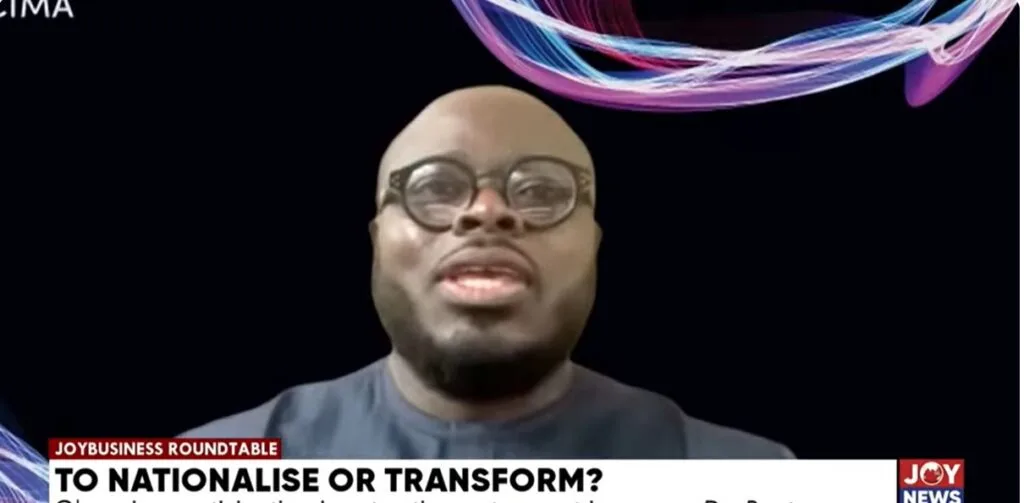
Dr. Frank Boateng, the Acting Director of the Institute of Mining Research and Governance at the University of Mines and Technology, is advocating for increased Ghanaian participation in the country's extractive sector. He believes that broader local ownership is crucial to ensuring that more citizens and mining communities benefit from Ghana's natural resources. Dr. Boateng doesn't think it's beneficial for the country to have limited local ownership, and he's calling for a change.
Speaking during a JoyBusiness Roundtable discussion on rethinking Ghana's approach to gold mining, oil, and critical minerals, Dr. Boateng stressed the need for deliberate policies to expand indigenous participation in mining operations. He suggested that the government could explore options such as converting portions of taxes owed by mining firms into equity stakes to increase Ghana's shareholding beyond the constitutionally mandated 10 percent free carried interest. This, he says, would allow Ghana to have more control over its natural resources.
Dr. Boateng asked, "Can we even defer some of our taxes to increase our equities in some of these mines, so that it pushes our ownership beyond the free carry of 10 percent?" He proposed that mining lease renewal negotiations should be used as opportunities to secure greater Ghanaian participation in mining operations. If mining companies are coming to lease renewal, we can renegotiate and increase our participation, he said. This way, Ghana won't miss out on potential benefits.
Dr. Boateng also warned against concentrating ownership solely in the hands of government or political actors, stressing that broader citizen participation through stock ownership would be more beneficial and sustainable. He identified the artisanal and small-scale mining sector as a major opportunity for increasing Ghanaian ownership in the extractive industry. Supporting well-performing local small-scale mining operators with financing and technical assistance could help transform them into medium-scale mining companies capable of attracting larger investments. This, in turn, would create more jobs and stimulate economic growth.
The Minerals Income Investment Fund's Small-Scale Incubation Project, which aimed to identify promising artisanal mining operators and provide support to help them scale up operations, is an example of such an initiative. Dr. Boateng maintained that empowering Ghanaian-owned mining firms and expanding citizen participation in the extractive sector would ultimately lead to greater national benefits and stronger local economic development. He doesn't think the country can afford to wait any longer to make these changes.
Ghana's changing political landscape and policy reversals often create uncertainty within the mining sector and discourage long-term investment planning. Looking at the nature of our politics in this country, when the government changes, things change dramatically, and sometimes decisions are reversed. This doesn't help, Dr. Boateng noted. He emphasized the need for a stable and predictable policy environment to attract investments and promote sustainable development in the extractive sector.
Without this stability, the country won't be able to achieve its goals.
Dr. Frank Boateng's call for increased Ghanaian participation in the extractive sector is timely, given the country's rich natural resources and the potential for economic growth and development. As the country seeks to diversify its economy and reduce its dependence on foreign aid, the extractive sector is expected to play a critical role. With the right policies and investments in place, Ghana can unlock the full potential of its natural resources and create jobs, stimulate economic growth, and improve the lives of its citizens. It's what the country needs to move forward.
Key Facts
- Dr. Frank Boateng is the Acting Director of the Institute of Mining Research and Governance at the University of Mines and Technology.
- The Institute of Mining Research and Governance is focused on promoting sustainable mining practices and increasing Ghanaian participation in the extractive sector.
- The JoyBusiness Roundtable discussion brought together stakeholders from the mining industry, government, and civil society to discuss ways to promote sustainable mining practices and increase Ghanaian ownership in the extractive sector.
- The Minerals Income Investment Fund's Small-Scale Incubation Project aims to support local small-scale mining operators and help them scale up their operations.
- Ghana's extractive sector is a significant contributor to the country's economy, with gold, oil, and critical minerals being major exports.
The Ghanaian government has a critical role to play in promoting sustainable mining practices and increasing Ghanaian participation in the extractive sector. By creating a stable and predictable policy environment, the government can attract investments, promote economic growth, and improve the lives of its citizens. As Dr. Boateng noted, empowering Ghanaian-owned mining firms and expanding citizen participation in the extractive sector is crucial to unlocking the full potential of the country's natural resources. It's what the government should focus on.
The call for increased Ghanaian participation in the extractive sector is not limited to the government. Civil society organizations, local communities, and the private sector also have a critical role to play. By working together, these stakeholders can promote sustainable mining practices, increase Ghanaian ownership, and ensure that the benefits of the extractive sector are shared equitably among all citizens. They can't do it alone, though - they need to collaborate.
As Ghana seeks to promote sustainable mining practices and increase Ghanaian participation in the extractive sector, the country can draw lessons from other countries that have successfully promoted local ownership and sustainable development in the extractive sector. For example, countries such as Botswana and Namibia have implemented policies to increase local ownership and promote sustainable development in the extractive sector. Ghana can learn from these experiences and adapt them to its own context. It's not going to be easy, but it's possible.
Dr. Frank Boateng's call for increased Ghanaian participation in the extractive sector is a timely reminder of the need for sustainable mining practices and equitable distribution of benefits in the extractive sector. As Ghana seeks to promote economic growth and development, the extractive sector is expected to play a critical role. With the right policies and investments in place, Ghana can unlock the full potential of its natural resources and create jobs, stimulate economic growth, and improve the lives of its citizens. The country won't achieve this overnight, but it's a step in the right direction.
Ghana's natural resources are a valuable asset, and the country can't afford to waste them. The government and stakeholders must work together to ensure that the extractive sector benefits all citizens, and that's what they're going to do.