

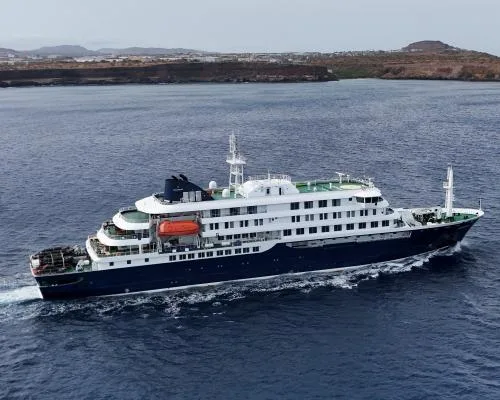
The MV Hondius, a Dutch-flagged cruise ship, is at the center of an unprecedented international health alert. On board, 149 passengers and crew are awaiting evacuation after a hantavirus outbreak that has already claimed three lives. The ship, which was sailing from Argentina to Cape Verde, is due to arrive in Tenerife on Sunday, triggering a complex operation to receive, assess, and repatriate those on board.
The situation is dire, with authorities warning that any delay in the evacuation could lead to days or even weeks of delay due to bad weather. The ship's arrival has prompted considerable unease in the Canaries, with the regional president, Fernando Clavijo, objecting to the ship coming into port at Granadilla. Instead, the ship will remain at anchor in the south-eastern port, and passengers will be evaluated on the ship before being taken to be repatriated or, in the case of the 14 Spanish nationals on board, transported to a military hospital in Madrid for compulsory quarantine.
The hantavirus outbreak has sparked a global response, with health authorities across four continents scrambling to track down and monitor passengers who left the ship before the outbreak was detected. The World Health Organization (WHO) has stressed that the public health threat is low, but the situation is being closely monitored. The WHO spokesperson, Christian Lindmeier, said that the risk the hantavirus strain in question poses to the public is minimal, as it spreads only through very close contact.
The evacuation operation is a complex one, with multiple countries involved in the repatriation of their citizens. The UK and the US are among the countries that have agreed to send planes to Tenerife to repatriate their citizens. The operation is being coordinated by the Spanish government, with the WHO providing guidance and support. The Spanish health minister, Mónica García, said that the operation is unprecedented and that everything possible is being done to protect people on Tenerife and across the wider archipelago.
Key Facts
- The MV Hondius is a Dutch-flagged cruise ship with 149 passengers and crew on board.
- The ship is due to arrive in Tenerife on Sunday, prompting an emergency evacuation.
- Three people have died in the outbreak, and several others have been confirmed to be infected.
- The ship will remain at anchor in the south-eastern port of Granadilla, and passengers will be evaluated on the ship before being taken to be repatriated.
- The WHO has stressed that the public health threat is low, but the situation is being closely monitored.
- The evacuation operation is being coordinated by the Spanish government, with the WHO providing guidance and support.
- The UK and the US are among the countries that have agreed to send planes to Tenerife to repatriate their citizens.
- The ship's operator and Dutch officials said that on 24 April, nearly two weeks after the first passenger had died onboard, more than two dozen people from at least 12 different countries left the ship without contact tracing.
Background to the Outbreak
The hantavirus outbreak on the MV Hondius is a rare and unusual event. Hantavirus is a type of virus that is typically spread through contact with infected rodents or their droppings. The Andes strain of the virus, which is believed to be responsible for the outbreak, is thought to be spread between people through very close contact. The WHO has said that the risk the hantavirus strain in question poses to the public is minimal, as it spreads only through very close contact.
The outbreak has sparked a global response, with health authorities across four continents scrambling to track down and monitor passengers who left the ship before the outbreak was detected. The situation is being closely monitored, and the WHO is providing guidance and support to the affected countries. The Spanish health minister, Mónica García, said that the operation is unprecedented and that everything possible is being done to protect people on Tenerife and across the wider archipelago.
The hantavirus outbreak has also raised questions about the safety of cruise ships and the measures in place to prevent the spread of infectious diseases. The ship's operator and Dutch officials have said that the ship was following all necessary protocols and guidelines to prevent the spread of the virus. However, the fact that the outbreak occurred despite these measures has raised concerns about the effectiveness of these protocols.
The Response to the Outbreak
The response to the outbreak has been swift and coordinated, with multiple countries and organizations involved in the evacuation and repatriation of passengers. The Spanish government has taken the lead in coordinating the response, with the WHO providing guidance and support. The UK and the US are among the countries that have agreed to send planes to Tenerife to repatriate their citizens.
The evacuation operation is a complex one, with multiple agencies and organizations involved. The Spanish health minister, Mónica García, said that the operation is unprecedented and that everything possible is being done to protect people on Tenerife and across the wider archipelago. The WHO spokesperson, Christian Lindmeier, said that the risk the hantavirus strain in question poses to the public is minimal, as it spreads only through very close contact.
The response to the outbreak has also highlighted the importance of international cooperation in responding to global health crises. The WHO has played a key role in coordinating the response, and the organization's guidance and support have been crucial in helping to contain the outbreak. The Spanish government has also worked closely with other countries and organizations to ensure a coordinated response to the outbreak.
The Impact on the Cruise Ship Industry
The hantavirus outbreak on the MV Hondius has raised concerns about the safety of cruise ships and the measures in place to prevent the spread of infectious diseases. The outbreak has sparked a global response, with health authorities across four continents scrambling to track down and monitor passengers who left the ship before the outbreak was detected.
The cruise ship industry has faced criticism in the past for its handling of infectious disease outbreaks. The industry has been accused of prioritizing profits over passenger safety, and the hantavirus outbreak has raised questions about the effectiveness of the measures in place to prevent the spread of infectious diseases. The WHO has said that the risk the hantavirus strain in question poses to the public is minimal, as it spreads only through very close contact.
The hantavirus outbreak has also had an impact on the local economy, with concerns about the potential impact on tourism. The regional president, Fernando Clavijo, has said that the ship's arrival has prompted considerable unease in the Canaries, and the outbreak has raised questions about the safety of the region for tourists. The Spanish health minister, Mónica García, has said that everything possible is being done to protect people on Tenerife and across the wider archipelago.
The Human Cost of the Outbreak
The hantavirus outbreak on the MV Hondius has had a devastating impact on the passengers and crew on board. Three people have died in the outbreak, and several others have been confirmed to be infected. The outbreak has sparked a global response, with health authorities across four continents scrambling to track down and monitor passengers who left the ship before the outbreak was detected.
The situation is dire, and we are doing everything possible to protect people on Tenerife and across the wider archipelago. The operation is unprecedented, and we are working closely with the WHO and other countries to ensure a coordinated response to the outbreak.
- Mónica García, Spanish Health Minister
The outbreak has also had an emotional toll on the passengers and crew on board. The ship's operator and Dutch officials have said that the passengers and crew are being closely monitored, and the WHO has said that the risk the hantavirus strain in question poses to the public is minimal, as it spreads only through very close contact. The Spanish health minister, Mónica García, has said that everything possible is being done to protect people on Tenerife and across the wider archipelago.
The Future of the MV Hondius
The future of the MV Hondius is uncertain, with the ship's operator and Dutch officials facing questions about the safety of the ship and the measures in place to prevent the spread of infectious diseases. The ship has been at the center of an unprecedented international health alert, and the outbreak has raised concerns about the effectiveness of the measures in place to prevent the spread of infectious diseases.
The ship's operator has said that the ship was following all necessary protocols and guidelines to prevent the spread of the virus. However, the fact that the outbreak occurred despite these measures has raised concerns about the effectiveness of these protocols. The WHO has said that the risk the hantavirus strain in question poses to the public is minimal, as it spreads only through very close contact.
The MV Hondius is due to undergo a thorough cleaning and disinfection before it is allowed to sail again. The ship's operator and Dutch officials have said that the ship will be subject to strict protocols and guidelines to prevent the spread of infectious diseases. The WHO has said that the situation is being closely monitored, and the organization is providing guidance and support to the affected countries.
Conclusion
The hantavirus outbreak on the MV Hondius has sparked a global response, with health authorities across four continents scrambling to track down and monitor passengers who left the ship before the outbreak was detected. The outbreak has raised concerns about the safety of cruise ships and the measures in place to prevent the spread of infectious diseases.
The response to the outbreak has been swift and coordinated, with multiple countries and organizations involved in the evacuation and repatriation of passengers. The WHO has played a key role in coordinating the response, and the organization's guidance and support have been crucial in helping to contain the outbreak.
The hantavirus outbreak on the MV Hondius has had a devastating impact on the passengers and crew on board, and it has raised questions about the effectiveness of the measures in place to prevent the spread of infectious diseases. The future of the MV Hondius is uncertain, with the ship's operator and Dutch officials facing questions about the safety of the ship and the measures in place to prevent the spread of infectious diseases.