

The Israeli military carried out airstrikes in southern Lebanon, killing at least six people, including three paramedics working at a health centre, just hours after its envoys had agreed with the Lebanese government to extend a ceasefire. It's a move that raises concerns about the fragility of the truce and the potential for a return to full-scale war in the region. They're concerns that don't seem to be going away anytime soon.
The Attack
The attack, which occurred on Friday, targeted what the Israeli military described as 'Hezbollah infrastructure' in southern Lebanon. The Lebanese authorities reported that at least five villages in the south of the country had been hit by strikes. This resulted in the deaths of six people. Among the dead were three paramedics who were working at a clinic run by the Hezbollah-linked Islamic Health Committee. They're a group that's been targeted before by Israel.
Izz al-Din al-Haddad's Death
In a separate incident, Israel confirmed it had killed the Hamas military chief, Izz al-Din al-Haddad, in a targeted strike in Gaza on Friday. Al-Haddad was described by Israel's army as one of the senior Hamas military commanders. He directed the planning and execution of the Hamas-led attacks on 7 October 2023, which killed about 1,200 people in southern Israel. More than 250 people were taken hostage in those attacks. A Hamas spokesperson, Hazem Qassem, confirmed the killing on social media.
He didn't provide any further details.
Background on Izz al-Din al-Haddad
Izz al-Din al-Haddad joined Hamas when it was established in the 1980s. He was a member of the Qassam Brigades' Majd section, tasked with targeting collaborators with Israel. He was also a member of Hamas' Military Council. This council is the highest group of commanders that played a key role in the attacks that sparked the war. They're a group that's been responsible for many attacks in the past.
Ceasefire Extension and Its Implications
The new strikes came hours after envoys from Israel and Lebanon completed a round of talks in Washington. They agreed to extend a month-long partly observed ceasefire for a further 45 days. They also agreed to establish a US-supervised security mechanism between their armies. However, Hezbollah has denounced the talks. Israel has only partly observed the ceasefire ordered by Trump on 17 April.
It's restricted attacks on Beirut and northern Lebanon in general while focusing its military operations in the south. This hasn't stopped the violence, though.
The situation in the region remains volatile. Reports in the US and Israeli press suggest that Donald Trump had been briefed on his military options in Iran. He might break a five-week-old truce and resume strikes in the hope of forcing concessions at the negotiating table. Pakistani-led mediation has failed to bring diplomatic progress in more than a month. Islamabad brokered a ceasefire in the Iran war, but the negotiating positions of the US and Iran are still far apart.
They can't seem to agree on anything.
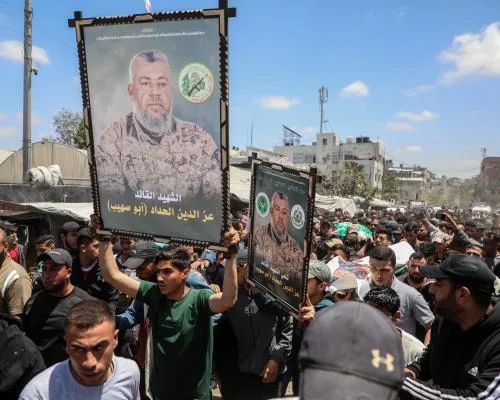
Funeral of Izz al-Din al-Haddad
Al-Haddad's family confirmed his death in Friday's strike to the Associated Press. Six other people, including his wife and daughter, were also killed, according to reports. His two sons were killed earlier in the war. His body was wrapped in Hamas and Palestinian flags as it was carried by mourners at Saturday's funeral in Gaza City. It was a somber occasion, with many people in attendance.
Next Steps
The Israeli army chief of staff called al-Haddad's killing a significant operation because it targets a key Hamas leader. Israel will continue pursuing its enemies to hold them accountable. The new strikes, which triggered a fresh exodus of civilians from the south, have raised concerns about the potential for a return to full-scale war in the region. It's a concern that's been raised before, and it won't go away anytime soon.
Key Facts
- At least six people were killed in the Israeli airstrikes in southern Lebanon.
- Three paramedics working at a health centre were among the dead.
- The attack occurred just hours after a ceasefire extension was agreed upon.
- Izz al-Din al-Haddad, the Hamas military chief, was killed in a targeted strike in Gaza.
- Al-Haddad was a senior Hamas military commander who directed the planning and execution of the Hamas-led attacks on 7 October 2023.
They're facts that highlight the complexity of the situation in the region.