

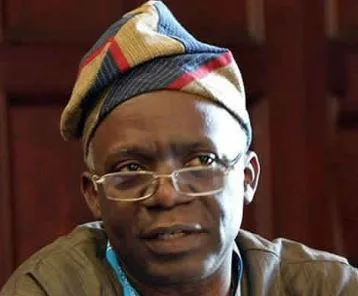
Human rights lawyer Femi Falana has warned that conflicting court judgments involving the Independent National Electoral Commission ahead of the 2027 general elections could create uncertainty that's capable of undermining the electoral process if it's not urgently addressed. He's concerned that these judgments won't be resolved quickly, and that's a problem.
In a statement titled “Nigerian Judges and Lawyers Should Be Prevented From Sabotaging the 2027 Election,” Falana criticised what he described as contradictory rulings delivered by judges of coordinate jurisdiction on the powers of INEC to fix timelines for party primaries and submission of membership registers. According to him, the conflicting decisions have placed INEC in a difficult position, as the commission now appears free to decide which judgment to obey. This isn't a good situation for INEC, and it's causing problems.
The senior advocate said such inconsistencies from courts of equal jurisdiction could weaken public confidence in the judiciary and the electoral process. He maintained that judges and lawyers must avoid actions that are capable of destabilising preparations for the 2027 polls. Falana noted that legal disputes shouldn't be used to create confusion around electoral procedures. It's essential that judges and lawyers are careful about what they do.
Last Wednesday, the Federal High Court invalidated the timeline issued by the Independent National Electoral Commission for the conduct of primaries and the nomination of candidates, ahead of the 2027 general election. The Court also set aside INEC’s May 10 deadline, which required political parties to submit a register and database of all their members as a condition for qualifying to participate in the general elections. This was a significant decision, and it's had a big impact.
The case was filed against INEC by the Youth Party. Yesterday, the Independent National Electoral Commission appealed against the Federal High Court’s judgement, which nullified its revised timetable and schedule of activities for the conduct of the 2027 general elections. INEC also filed a motion for stay of execution of the judgement, pending the hearing and determination of its appeal at the Court of Appeal. This is a complicated situation, and it's not clear what will happen next.
Today, the Federal High Court affirmed that the Independent National Electoral Commission has the legal authority to fix timelines within which political parties must conduct their primaries ahead of the 2027 general elections. The court held that INEC is empowered under the Constitution and the Electoral Act 2026 to issue election timetables that include deadlines for political party primaries and related preparatory activities. This decision is important, and it clarifies INEC's role.
“The judgments of the both courts of coordinate jurisdiction have caused unnecessary confusion in the polity. While Justice Muhammed Umar of the Federal High Court has limited INEC’s powers by barring it from imposing deadlines that conflict with statutory provisions, Justice A. K. Omotosho of the same Court has affirmed INEC’s authority to issue a timetable that includes timelines for party primaries.” This is a confusing situation, and it needs to be resolved.
The National Judicial Council had repeatedly cautioned Judges to desist from issuing conflicting orders, and lawyers have equally been warned by the Nigerian Bar Association to stop filing cases that are programmed to cause Judges to issue conflicting orders. In this case, Justice Omotosho ought to have allowed the Court of Appeal to determine the validity of the judgment of Justice Muhammed Umar instead of issuing conflicting orders. This would've been a better approach, and it would've avoided some of the confusion.
The National Judicial Council and the Nigerian Bar Association should speedily investigate the circumstances surrounding the issuance of conflicting orders in the cases of Youth Party v INEC and Social Democratic Party v INEC. Unless the Judges and lawyers involved in the legal charade are called to order, the 2027 election may be sabotaged by Judges and lawyers, just like what happened in 1993 when the Ibrahim Babangida military junta anchored the annulment of the results of the June 12 presidential election on conflicting orders of Nigerian courts. This is a serious concern, and it needs to be addressed.
Femi Falana is a well-known human rights lawyer in Nigeria, and his statement highlights the potential risks associated with conflicting court judgments. His warning is significant, as it comes ahead of the 2027 general elections, which are crucial for the country's democratic process. Falana's concerns can't be ignored, and they need to be taken seriously.
- The Federal High Court invalidated the timeline issued by the Independent National Electoral Commission for the conduct of primaries and the nomination of candidates.
- INEC appealed against the Federal High Court’s judgement and filed a motion for stay of execution of the judgement.
- The Federal High Court affirmed that the Independent National Electoral Commission has the legal authority to fix timelines within which political parties must conduct their primaries.
- The National Judicial Council had repeatedly cautioned Judges to desist from issuing conflicting orders.
- The Nigerian Bar Association warned lawyers to stop filing cases that are programmed to cause Judges to issue conflicting orders.
The potential sabotage of the 2027 elections by judges and lawyers is a serious concern, and it's essential that the National Judicial Council and the Nigerian Bar Association take immediate action to address the issue. The conflicting court judgments have created uncertainty and confusion, which could undermine the electoral process if they're not resolved promptly. It's crucial that the issue is addressed quickly, and that's what should happen.
The Electoral Act 2026 empowers INEC to issue election timetables that include deadlines for political party primaries and related preparatory activities. However, the conflicting court judgments have raised questions about the commission's authority to fix timelines for party primaries and submission of membership registers. This is a problem, and it needs to be fixed.
The Social Democratic Party had filed a case against INEC, seeking to affirm the commission's authority to issue timetables for party primaries. The Federal High Court's judgment in the case affirmed INEC's authority, but the conflicting orders from the courts have created confusion and uncertainty. It's not clear what will happen next, and that's a concern.
The Youth Party had filed a case against INEC, challenging the commission's timeline for party primaries and nomination of candidates. The Federal High Court's judgment in the case invalidated the timeline, but INEC's appeal and motion for stay of execution have created a complex situation. It's not clear how this will be resolved, and that's a problem.
The National Judicial Council and the Nigerian Bar Association must investigate the circumstances surrounding the issuance of conflicting orders in the cases of Youth Party v INEC and Social Democratic Party v INEC. The investigation should aim to prevent similar conflicts in the future and ensure that the electoral process isn't undermined by conflicting court judgments. It's essential that the investigation is thorough, and that it leads to some positive changes.
The 2027 general elections are crucial for Nigeria's democratic process, and it's essential that the electoral commission, judges, and lawyers work together to ensure a free and fair election. The conflicting court judgments have raised concerns about the potential sabotage of the elections, and it's imperative that the issues are addressed promptly to prevent any disruption to the electoral process. It's not going to be easy, but it's essential that it's done.
The Electoral Act 2026 provides a framework for the conduct of elections in Nigeria, and it's essential that the law is applied consistently and fairly. The conflicting court judgments have created uncertainty and confusion, and it's crucial that the National Judicial Council and the Nigerian Bar Association take immediate action to address the issue. They can't afford to wait, and they shouldn't.
The potential sabotage of the 2027 elections by judges and lawyers is a serious concern that requires immediate attention. The conflicting court judgments have created uncertainty and confusion, and it's essential that the National Judicial Council and the Nigerian Bar Association investigate the circumstances surrounding the issuance of conflicting orders and take prompt action to prevent any disruption to the electoral process. They won't be able to fix everything, but they should try to fix as much as they can.