

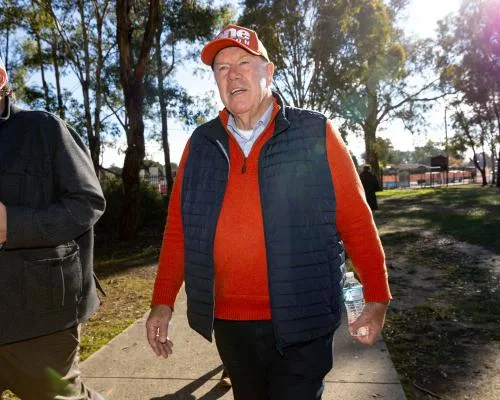
One Nation is poised to make history by winning the Farrer byelection, a seat held by the Liberal party for its entire 76-year history. As of Saturday night, early results showed the party's candidate, David Farley, taking the lead in the closely watched race. This comes as a significant blow to Angus Taylor's depleted Liberal party, which has been struggling to regain public support since last year's federal election.
The Farrer byelection has been a highly anticipated event, with many voters eager to see if One Nation's surging popularity would translate into a win. The party's leader, Pauline Hanson, has been a dominant force in Australian politics for decades, known for her outspoken views on immigration and social issues. Despite her party's growing support, Hanson has faced criticism and controversy over the years, including accusations of racism and xenophobia.
As the results began to roll in, it became clear that One Nation was gaining significant traction in the small rural communities within the electorate. The Liberal vote, on the other hand, was tanking, with many voters switching their allegiance to One Nation or independent candidate Michelle Milthorpe. Milthorpe's vote was also down compared to last year's federal election, but she is expected to perform stronger in the main population centre of Albury.
The implications of a One Nation victory in the Farrer byelection are significant, as it would mark the first time the party has won a lower house seat in an election or byelection. This would be a major breakthrough for Hanson and her party, which has been working to expand its support base beyond its traditional strongholds. As the results continue to roll in, it's clear that One Nation is on the cusp of a historic victory, one that could have far-reaching consequences for Australian politics.
Key Facts
- One Nation is on track to win the Farrer byelection
- The party's candidate, David Farley, is leading in the closely watched race
- The Liberal candidate Raissa Butkowski and the Nationals' Brad Robertson were never considered strong contenders
- The Farrer byelection is a significant test of One Nation's surging popularity
- Pauline Hanson is the leader of One Nation
- The party has been growing in support since last year's federal election
- The Farrer electorate has been held by the Liberal party for its entire 76-year history
- The byelection was triggered by the resignation of former opposition leader Sussan Ley
Background on One Nation
One Nation has been a significant player in Australian politics for over two decades, with Pauline Hanson at its helm. The party was founded in 1997, after Hanson was elected to Parliament as an independent in 1996. Since then, One Nation has been known for its populist and nationalist policies, which have resonated with many voters who feel disillusioned with the major parties. Despite its growing support, One Nation has faced criticism and controversy over the years, including accusations of racism and xenophobia.
One Nation's support base has traditionally been strongest in rural and regional areas, where voters feel disconnected from the major parties and their policies. The party has also been successful in tapping into concerns about immigration and social issues, which have been major themes in Australian politics in recent years. However, One Nation's success has not been without its challenges, as the party has faced internal conflicts and controversies over the years.
The party's leader, Pauline Hanson, has been a dominant force in Australian politics for decades. She is known for her outspoken views on immigration and social issues, and has been a vocal critic of the major parties. Despite facing criticism and controversy, Hanson remains a popular figure among many voters, who see her as a straight-talking and genuine alternative to the major parties.
The Farrer Byelection
The Farrer byelection was triggered by the resignation of former opposition leader Sussan Ley, who held the seat for the Liberal party. The byelection has been a highly anticipated event, with many voters eager to see if One Nation's surging popularity would translate into a win. The electorate of Farrer is a significant one, covering a large area of regional New South Wales and including the city of Albury.
The byelection campaign has been marked by controversy and debate, with many voters expressing dissatisfaction with the major parties and their policies. One Nation's candidate, David Farley, has been a strong contender, with many voters drawn to his message of change and reform. However, Farley has also faced criticism and controversy, including revelations about his past membership of the Nationals and his consideration of standing for Labor.
As the results of the byelection continue to roll in, it's clear that One Nation is on the cusp of a historic victory. This would be a significant breakthrough for the party, which has been working to expand its support base beyond its traditional strongholds. The implications of a One Nation win in the Farrer byelection are far-reaching, and could have significant consequences for Australian politics.
Voter Reactions
As the results of the byelection continue to roll in, many voters are expressing their reactions and opinions. For some, a One Nation victory is a welcome change, and a sign that the major parties are out of touch with the needs and concerns of regional voters. For others, however, a One Nation win is a cause for concern, and a sign that the party's populist and nationalist policies are gaining traction.
I would like to see an independent get into parliament and hold some of these bigger parties accountable, said Paige, a 33-year-old voter from the small town of Howlong. I'm nervous about the prospect of a One Nation candidate because of what's happening on the international stage with radicalized ideas.
Many voters are also expressing dissatisfaction with the major parties, and a desire for change and reform. For some, One Nation's message of change and reform is appealing, and a sign that the party is willing to challenge the status quo and take on the major parties.
The Road Ahead
As the results of the byelection continue to roll in, it's clear that One Nation is on the cusp of a historic victory. This would be a significant breakthrough for the party, which has been working to expand its support base beyond its traditional strongholds. The implications of a One Nation win in the Farrer byelection are far-reaching, and could have significant consequences for Australian politics.
The road ahead for One Nation and its leader, Pauline Hanson, will be challenging, as the party seeks to build on its success and expand its support base. However, with its surging popularity and growing support, One Nation is well-placed to make a significant impact on Australian politics in the years to come.
As the dust settles on the Farrer byelection, it's clear that One Nation is a force to be reckoned with in Australian politics. The party's message of change and reform has resonated with many voters, and its leader, Pauline Hanson, remains a dominant force in the political landscape. As the party looks to the future, it's clear that One Nation will continue to play a significant role in shaping the direction of Australian politics.
Conclusion
The Farrer byelection has been a significant event in Australian politics, with One Nation on track to win the seat in a historic victory. The implications of this win are far-reaching, and could have significant consequences for the major parties and the direction of Australian politics. As the results continue to roll in, it's clear that One Nation is a force to be reckoned with, and that its leader, Pauline Hanson, remains a dominant figure in the political landscape.
The road ahead for One Nation will be challenging, as the party seeks to build on its success and expand its support base. However, with its surging popularity and growing support, One Nation is well-placed to make a significant impact on Australian politics in the years to come. As the dust settles on the Farrer byelection, it's clear that One Nation is a force to be reckoned with, and that its influence will be felt for years to come.
Final Thoughts
As the results of the Farrer byelection continue to roll in, it's clear that One Nation is on the cusp of a historic victory. This would be a significant breakthrough for the party, which has been working to expand its support base beyond its traditional strongholds. The implications of a One Nation win in the Farrer byelection are far-reaching, and could have significant consequences for Australian politics.
As the party looks to the future, it's clear that One Nation will continue to play a significant role in shaping the direction of Australian politics. With its surging popularity and growing support, One Nation is well-placed to make a significant impact on the major parties and the direction of Australian politics. As the dust settles on the Farrer byelection, it's clear that One Nation is a force to be reckoned with, and that its influence will be felt for years to come.