

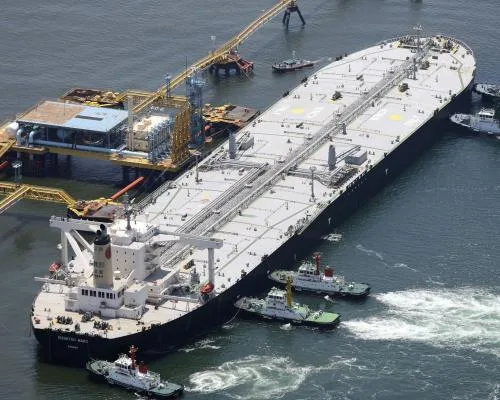
The oil price is creeping back towards the $100 a barrel mark, up 2.5% today at $98.57 a barrel, as global investors cling to hopes that a US-Iran peace deal could be close. This surge in oil price is a significant concern for consumers because it could lead to higher prices that might persist over the summer. Consumers don't want to see higher prices, and they're already feeling the pinch.
And this isn't just about oil prices - the disruption to global shipping, coupled with soaring prices for energy and raw materials, have driven up costs for UK companies. The impact is already filtering through to prices paid at the tills, according to fresh inflation figures. Retailers have responded by launching promotions to tempt bargain hunters, but businesses say it's getting harder to stave off price increases. They're trying to balance their need to maintain profits with the need to keep prices competitive.
Jim Reid of Deutsche Bank suggests that the US attacks on missile sites in southern Iran and boats trying to lay mines were a warning shot that the ceasefire is fragile. He explained:
These actions were described as “defensive” and not an end to the ceasefire with Iran. Net net, optimism is still elevated that an agreement can be made to end the war. It's likely that the US and Iran won't give up on the peace talks.
The British Retail Consortium (BRC) reports that shop price inflation is already on the rise, with furniture and health and beauty products among the items that have risen most in recent weeks. This has driven an increase in shop prices of 1.2% year on year in May, which is slightly above the three-month average of 1.1%. The BRC says this trend won't reverse anytime soon.
US and Iranian negotiators are in Doha to discuss a potential end to the three-month war, after Donald Trump declared last weekend that a peace deal with Iran “has been largely negotiated”. However, yesterday's US strikes in the Middle East have created some doubts that a deal is genuinely close. It's clear that the US and Iran still have some issues to resolve.
The yields (or interest rates) on US debt have dropped today as prices rally, lifted by hopes that a peace deal will reopen the strait of Hormuz and ease the inflationary pressures hitting the world economy. Wall Street, which was closed yesterday, is on track to open higher. Markets have become more “risk-sensitive,” reports Daniela Hathorn, senior market analyst at Capital.com, who cautions:
Markets are still leaning optimistic, but the tolerance for negative headlines is shrinking. If negotiations stall further or the Strait disruption worsens, the reaction across oil, yields and equities could become much sharper than it has been over the past few weeks. They're watching the situation closely.
UK companies are feeling the pressure, with the Confederation of British Industry (CBI) set to release its distributive trades survey of UK retail for May later today. The Chicago Fed index of US National Activity for April and the S&P/Case-Shiller index of US house prices are also due for release. These numbers will provide further insight into the state of the economy and the impact of the ongoing US-Iran conflict. They'll help analysts understand what's happening.
As the situation continues to unfold, it's clear that the oil price surge is having a tangible impact on UK consumers. With shop price inflation on the rise, it's likely that consumers will be looking for ways to cut back on spending. And for businesses, the challenge will be to balance the need to maintain profits with the need to keep prices competitive. They can't just raise prices without losing customers.
Key Facts
- Oil price up 2.5% to $98.57 a barrel
- US and Iranian negotiators in Doha to discuss peace deal
- Shop price inflation rises 1.2% year on year in May
- US debt yields drop as prices rally
- Wall Street set to open higher
The UK government has been called upon to go beyond existing measures to help alleviate the pressure on businesses and consumers. As the oil price surge shows no signs of abating, it's likely that we'll see further action from the government to mitigate the impact of the US-Iran conflict on the UK economy. They won't ignore the problem.
In the meantime, consumers will be keeping a close eye on prices, looking for any opportunity to save money. And for businesses, the focus will be on finding ways to maintain profits without passing on the increased costs to consumers. It's a delicate balance, but one that will be crucial in the coming months. They can't afford to make mistakes.
As the world waits for news of a US-Iran peace deal, the impact of the conflict will be felt for many months to come. The conflict has already caused problems, and it's likely to cause more. For UK consumers and businesses, the challenge will be to navigate the uncertain economic landscape and find ways to thrive in a time of turmoil. They're preparing for the worst.