

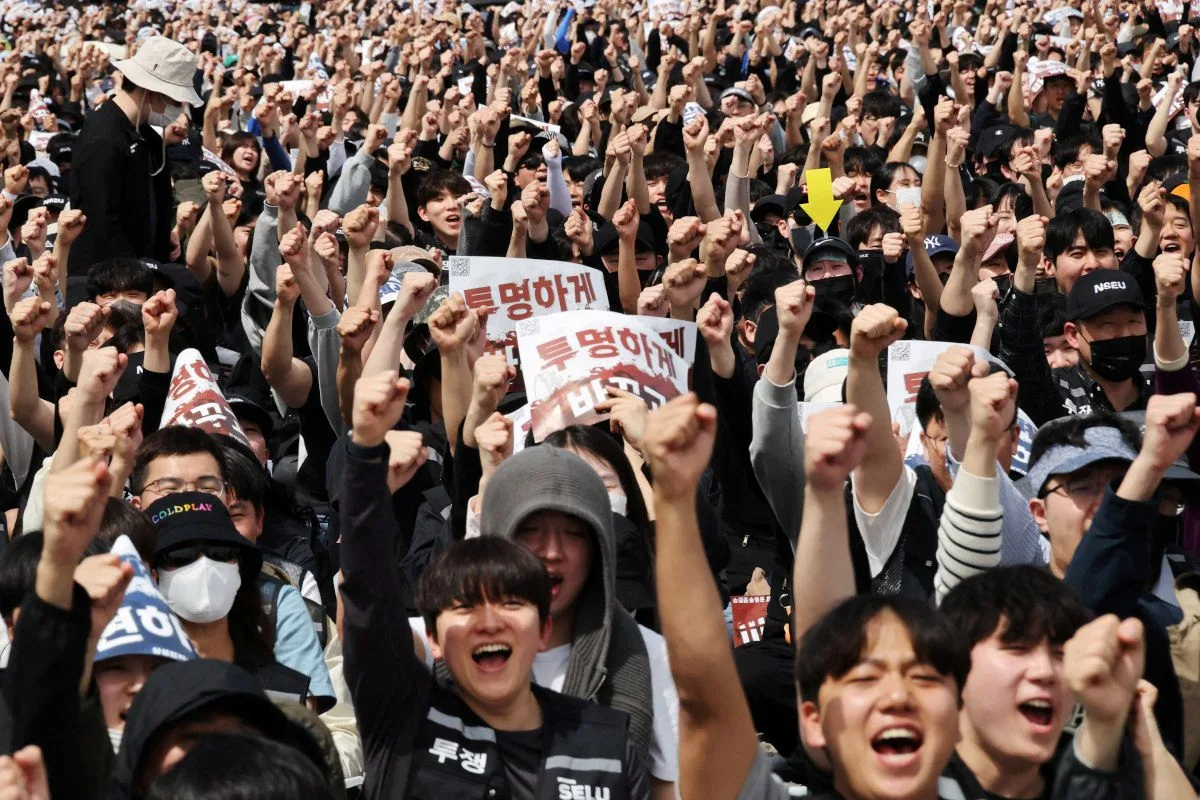
The tech giant Samsung Electronics just avoided a massive headache that could've shut down production for nearly three weeks. Unionized workers finally voted to accept a new bonus structure, ending a bitter five-month standoff between the staff and the company’s leadership. With 74% of the 62,616 voting employees in favor, the deal keeps the assembly lines moving at a time when the world is practically begging for more computer chips.
Investors seem to love the stability, sending Samsung shares soaring by 6% on the news. This excitement is fueled by the massive global demand for Artificial Intelligence, which has turned chipmakers into the rockstars of the tech market. Because the company accounts for roughly 25% of all exports from South Korea, this peace agreement is a win for the workers and a relief for the entire national economy.
"The atmosphere is pretty gloomy and many of us lost motivation. It really is an ironic situation — being depressed despite receiving more money."
That sentiment, shared by an anonymous worker at the Pyeongtaek foundry, cuts to the heart of the divide. The deal isn't exactly a uniform win for everyone in the building. It heavily favors the memory chip division, which is currently raking in profits thanks to the AI frenzy. Some of these lucky employees are looking at bonuses as high as $416,000 this year. That figure sounds more like a lottery win than a standard performance incentive.
Meanwhile, staff working in consumer electronics divisions are likely to see much smaller payouts, creating a two-tier reality under the same roof.
The agreement forces a new level of transparency regarding how Samsung shares its wealth with its massive workforce. Under the terms, every chip division employee gets a guaranteed cash bonus equal to 50% of their base annual salary. On top of that, Samsung has committed to set aside 10.5% of the memory chip unit’s operating profit specifically for special bonuses paid in stock. This isn't a simple cash transfer. One-third of those stocks are liquid immediately, while the rest are locked behind one-year and two-year waiting periods to keep employees around.
These rewards are strictly conditional, tied to the company meeting specific and very ambitious profit milestones. To keep the bonuses flowing, Samsung must hit over 200 trillion won in annual operating profit from 2026 to 2028. After that, the bar rises again to 100 trillion won every year through 2035. With 2026 profits projected to hit a staggering 300 trillion won—or roughly $200 billion—the company is smashing its previous 2018 record of 58.9 trillion won by a wide margin.
The pressure to reach this deal wasn't just about internal morale; it was about keeping pace with rivals like SK Hynix. Workers were frustrated watching their counterparts at other chip companies receive much larger, performance-linked rewards while they felt left behind. By bringing these bonuses closer to the industry standard, Samsung hopes to stop its best talent from jumping ship. The underlying tension between the high-flying memory chip division and the more grounded electronics units shows that keeping a corporate behemoth happy is a difficult balancing act, even with billions of dollars on the table.