

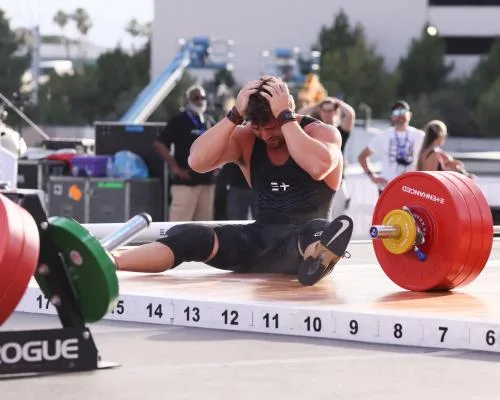
The Enhanced Games, a new sporting event that allows athletes to use performance-enhancing drugs, has been met with widespread criticism from the athletic community. Despite this, the event's founder, Christian Angermayer, is confident that it'll be a success and even believes it'll be the next UFC.
The event, which was held in Las Vegas, featured a number of athletes competing in various sports, including track and field, swimming, and weightlifting. The performances were largely mediocre, with many athletes failing to break records or even come close to their personal bests. They didn't deliver the kind of excitement that Angermayer had hoped for.
One of the most notable moments of the event came when the announcer suggested that Florence Griffith Joyner's world record of 10.49 seconds in the women's 100m might be under threat. However, the winner of the event, Tristan Evelyn, crossed the finish line in a time of 11.26 seconds. This time wouldn't have been enough to make it out of the first round of the 2024 Olympics. It's clear that the event has a long way to go.
Despite the lackluster performances, Angermayer is optimistic about the future of the event. He has revealed plans to invite fitness influencers to compete alongside elite athletes next year. He's also considering adding a legends section to the event. These changes might help to boost the event's popularity.
The use of performance-enhancing drugs has been a major point of contention for the event. Many athletes have been critical of the event's stance on doping, with some accusing the organizers of promoting and normalizing the use of banned substances. They're worried that this could have serious consequences for the sport as a whole.
“You can’t pay a mortgage with morals,” said Sean Ingle, a journalist who attended the event.
Ingle's comments highlight the financial incentives that are driving many athletes to participate in the event. The winner of the women's 100m, Tristan Evelyn, competed as a drug-free athlete and took home $250,000. This is significantly more than what she would've earned competing in a traditional athletic event. It's clear that the financial rewards are a major draw for athletes.
The event has also been criticized for its lack of transparency and accountability. The organizers have been accused of being more interested in promoting their products, including testosterone cream and peptides, than in providing a legitimate sporting competition. They're not being upfront about their goals and motivations.
The Enhanced Games has been compared to the UFC, with some suggesting that it could follow a similar trajectory and become a major player in the world of sports. However, others are more skeptical, pointing out that the event's focus on performance-enhancing drugs is a major turn-off for many fans and athletes. They don't think it has a future in the sport.
As the debate over the Enhanced Games continues, it's clear that the event is not going away anytime soon. With its plans for expansion and its lucrative financial incentives, the Enhanced Games is likely to remain a topic of conversation in the athletic community for years to come. It'll be interesting to see how it develops.
- The Enhanced Games is a new sporting event that allows athletes to use performance-enhancing drugs.
- The event was held in Las Vegas and featured a number of athletes competing in various sports.
- The winner of the women's 100m, Tristan Evelyn, competed as a drug-free athlete and took home $250,000.
- The event has been criticized for its lack of transparency and accountability.
- The organizers have been accused of being more interested in promoting their products than in providing a legitimate sporting competition.
The future of the Enhanced Games is uncertain, but it's clear that it'll continue to be a topic of controversy and debate in the athletic community. With its plans for expansion and its lucrative financial incentives, the event is likely to remain a major player in the world of sports for years to come. It's not going to fade away anytime soon.
The use of performance-enhancing drugs is a complex issue, and the Enhanced Games has brought it to the forefront of the athletic community. While some argue that the event is promoting and normalizing the use of banned substances, others see it as an opportunity for athletes to compete on a level playing field. They think it's a way to make the sport more fair.
As the debate over the Enhanced Games continues, it's clear that the event is not just about sports - it's about the ethics and morality of using performance-enhancing drugs. The event has sparked a conversation that's likely to continue for years to come, and its impact will be felt far beyond the world of sports. It's a much bigger issue than just sports.
In the end, the success of the Enhanced Games will depend on its ability to provide a legitimate and transparent sporting competition. If it can do so, it may be able to overcome the criticism and controversy that has surrounded it. However, if it fails to address the concerns of the athletic community, it may ultimately be doomed to fail. It's a tough road ahead.
The Enhanced Games is a complex and multifaceted issue, and its impact will be felt for years to come. As the athletic community continues to grapple with the use of performance-enhancing drugs, the event will remain a major topic of conversation and debate. It's not going away, and it's not going to be resolved anytime soon. The conversation will continue, and it'll be interesting to see how it develops.