

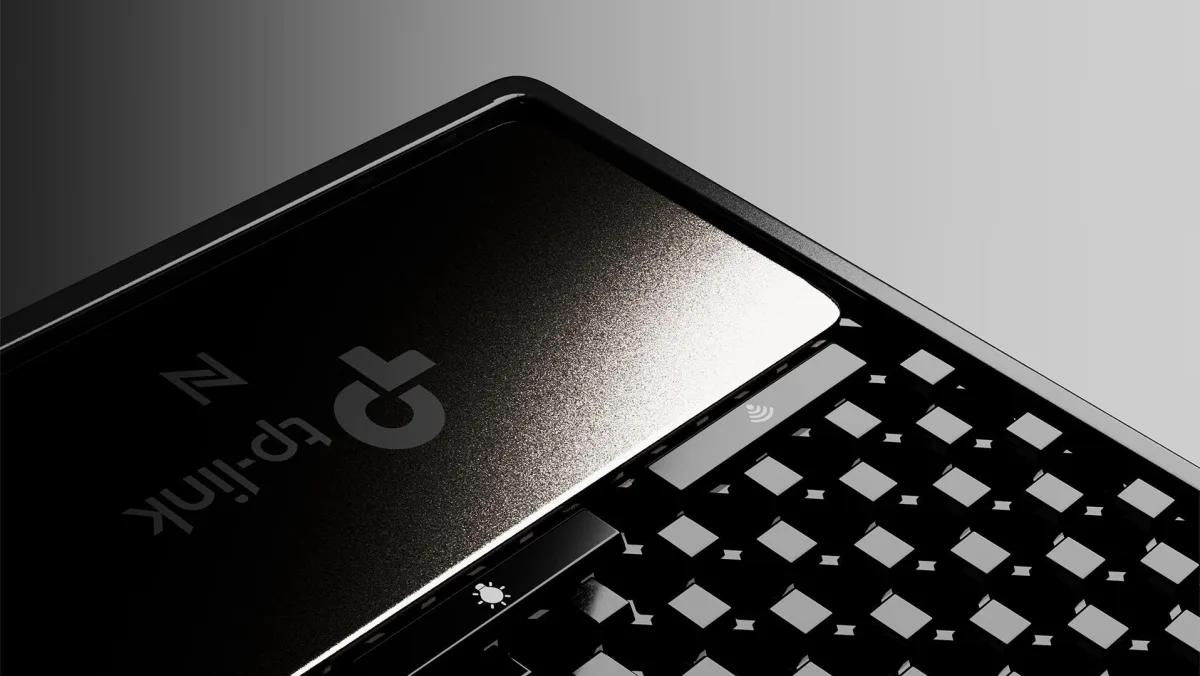
It feels like just yesterday everyone was upgrading to Wi-Fi 7, hunting for those faster speeds and promised seamless connections. In the fast-paced world of Silicon Valley and global tech manufacturing, staying still is basically moving backward. Today, TP-Link Systems Inc. has officially announced its first consumer router platform built for the brand-new Wi-Fi 8 standard, known technically as the IEEE 802.11bn specification.
This isn't just about cranking up the speed to numbers most people won't notice in their daily browsing. The Archer 8, which is set to hit the shelves in October 2026, is leaning hard into a different goal: total reliability. TP-Link is aiming to kill off the most frustrating parts of home internet, like that random buffering during your favorite Netflix show or the jittery video call that drops exactly when you’re about to make a point.
"For years, Wi-Fi innovation has been measured by peak theoretical speeds. But what users actually care about is consistency. Archer 8 is designed to deliver exactly that: lower latency, better performance under interference, and more stable connectivity in real-world environments."
Jeff Barney, the president of TP-Link Systems Inc., emphasized this shift during the announcement. The company’s internal lab testing under simulated, crowded home conditions claims some pretty wild results compared to the outgoing generation. They’re reporting a 33% boost in throughput at long range and a 30% improvement in signal performance for houses with multiple floors. This improvement offers a major advantage for anyone living in a big apartment block where everyone else’s router is fighting for the same airwaves.
The Archer 8 isn't just a powerful box of chips; it’s designed to look like something you wouldn't mind putting on your living room shelf. With micro-ridge texturing and a soft lighting effect, it’s going for a "modern" look rather than the usual "alien spaceship" aesthetic many high-end routers have favored over the last decade. Under the hood, it’s using AI-assisted network intelligence to handle the chaos of having twenty different smart devices all begging for bandwidth at the same time.
After the October launch of the Archer 8, TP-Link has a roadmap that stretches well into next year. They plan to release the Deco 8, a full-blown mesh system, in the first quarter of 2027. By the second quarter of 2027, they expect to ship the Roam 8, which is a portable travel router designed for people who can't stand the weak Wi-Fi signal in hotel rooms. They are also planning a fleet of range extenders and adapters to round out the ecosystem.
Home networking has hit a bottleneck of its own making. As we plug in more appliances, light bulbs, security cameras, and gaming consoles, the actual air quality of our Wi-Fi becomes more cluttered. Improving reliability at a protocol level, as the IEEE 802.11bn spec does, means your router isn't just shouting louder; it’s actually managing the traffic better. It’s a necessary evolution for a world that is becoming increasingly dependent on stable connections for everything from remote work to smart home automation.
The company hasn't released the final price tags or specific regional release dates for the Nigerian market yet. However, the scale of this rollout suggests they want this tech in every corner of the world quickly. For those who live in dense urban areas like Lagos, where interference from dozens of neighbors' Wi-Fi signals is a daily reality, these improvements in spatial reuse coordination could be a game-changer. The ability to maintain a clean signal even when the radio spectrum is crowded is the most practical upgrade they’ve promised.