

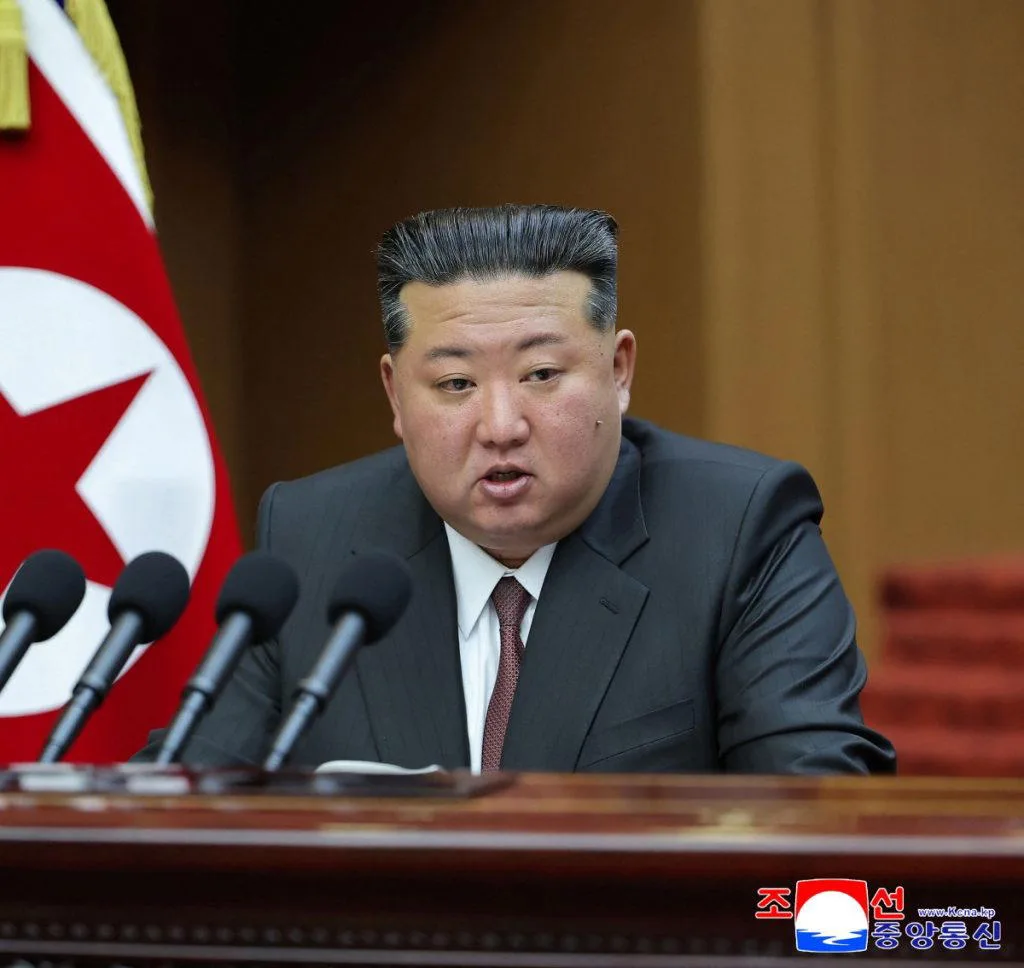
North Korea just rolled out a new multi-purpose missile launcher and tactical cruise weapons, marking the eighth time the country has flexed its military muscle this year. Kim Jong Un, the country’s leader who inherited power from his father in 2011, stood right beside the launch vehicles to watch the show himself. This latest display of hardware wasn't just for practice. It represents a tactical upgrade to modernize the North's strike capabilities.
The state-run Korean Central News Agency, known as KCNA, reported that the test was a success on Wednesday. These weapons are designed to be mobile, meaning they can hide, move, and fire before anyone sees them coming. The tactical ballistic missiles tested are fitted with special warheads, while the 240mm artillery rockets now use an autonomous navigation system. They're trying to make their weapons as smart as they are dangerous.
It's an essential condition for our army’s operations to have enough destructive power to make any encountering force impossible to survive theoretically, apart from fortune.
South Korea’s military observed the projectiles flying about 80 kilometres off the west coast of the peninsula before crashing into the water. While 80 kilometres might not sound like a world-ending distance, it's more than enough to reach significant targets across the border. Analysts believe this is part of a bigger plan to build up an "impregnable fortress" along the divide between the two Koreas. They're moving away from brute force and toward precision, making it harder for neighbours to defend themselves.
This specific combination of cruise missiles, guided rockets, and ballistic tech forms a complete, automated package. Hong Min, an analyst at the Korea Institute for National Unification in Seoul, notes that this integration is designed to overwhelm defenses without necessarily reaching for a nuclear weapon. By staying just below that nuclear threshold, Pyongyang is testing the limits of what the international community will tolerate.
North Korea has been under United Nations sanctions for years, which technically bans them from developing ballistic missile tech. They've treated these bans like suggestions rather than laws, continuing to upgrade their arsenal under the watchful eyes of global monitors. The focus has shifted from mere quantity to "ultra-high defence science," according to the North's state media releases. This latest tech involves a 240mm controlled artillery rocket with an expanded range. This is a significant technological leap compared to the standard, less accurate systems they used to rely on.
Photos released by the government show a massive flame erupting from the launch tube, illuminating the surrounding area with blinding light. These mobile launchers are often built on heavy-duty trucks. This allows the North to park them, fire, and disappear into the dense, hilly terrain before any counter-battery fire can find them. In April, they ran a separate test for a "cluster bomb" warhead. This shows they're interested in wide-area damage just as much as they are in individual precision strikes.
Kim’s rhetoric remains as sharp as ever, framing these tests as an unavoidable requirement for national survival. His military officials are tasked with integrating these systems directly into their operational units stationed at the southern border. This isn't just about showing off shiny new metal at a parade. It's about having a ready-to-deploy strategy for a conflict that many fear could erupt without warning. The sheer frequency of these tests—eight times in just five months—suggests a sense of urgency that has kept Seoul and its allies on edge all through this year.