

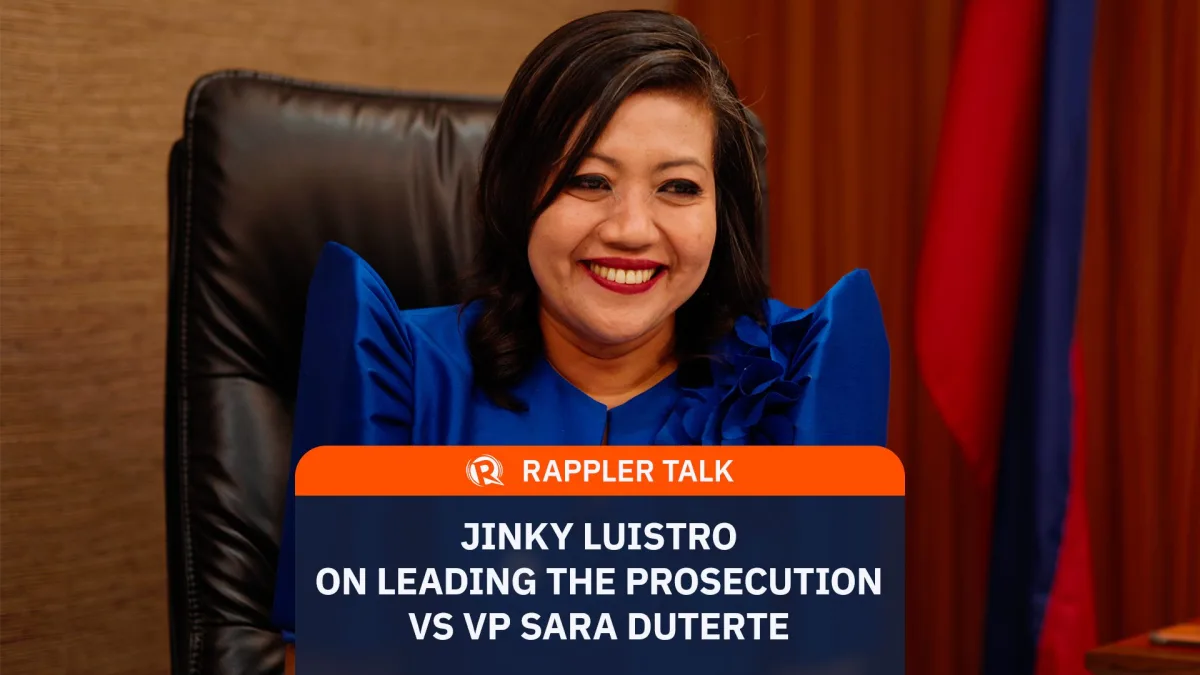
The political arena in Manila is currently bracing for a monumental clash as Gerville “Jinky” Luistro, the Representative of the 2nd District of Batangas, formally steps into the role of lead prosecutor in the impeachment case against Vice President Sara Duterte. She has successfully steered the preliminary hearings in the House of Representatives. Luistro is now tasked with building a case that will hold water before the Senate, which acts as the impeachment court in the Philippines.
Luistro, a lawyer by trade, has spent months dissecting the financial records and administrative decisions attributed to the Office of the Vice President. Her elevation to lead prosecutor shifts the process from the initial fact-finding phase into a full-blown judicial contest. The process follows the constitutional mandate requiring the House to gather evidence. The Senate must then conduct the actual trial to determine if the Vice President will be removed from office.
"The law doesn't bow to power; it only bows to the truth as presented in the evidence we've painstakingly gathered."
The gravity of the situation is immense, yet Luistro remains composed in the public eye, often downplaying the personal toll of being the face of this prosecution. Her team spent weeks coordinating with experts to ensure that every allegation of fund mismanagement is backed by paper trails, invoices, and bank statements that can withstand intense cross-examination. She isn't a novice in the legal game. Prosecuting a sitting Vice President from the powerful Duterte family is a different animal entirely, as it involves layers of political influence that have shaped Philippine governance for decades.
Concerns about the "Duterte factor" loom large over the proceedings, as the former President and the Vice President maintain a significant base of loyal supporters who view these charges as politically motivated. Observers wonder how Luistro plans to insulate the legal team from potential retaliation or the inevitable smear campaigns that often follow high-profile cases in Manila. The House impeachment process serves as the foundational groundwork. The Senate phase is where the final verdict happens, requiring a two-thirds majority vote from the senators to secure a conviction.
The prosecution team is scrutinizing the alleged misuse of confidential and intelligence funds allocated to the Office of the Vice President. Financial discrepancies pointed out by the Commission on Audit form the backbone of the evidence presented during the initial lower house inquiries. Each member of the prosecution team, under Luistro's direction, has been assigned specific chapters of the impeachment complaint to research and argue. The Senate impeachment court requires at least 16 out of 24 senators to vote in favor of conviction for the Vice President to be officially removed from her post. The impeachment is a legal process, but the political reality of the Senate chamber remains a key hurdle that Luistro and her colleagues must navigate, as many senators have deep-seated alliances that could sway the final vote.
In our culture, Filipinos often look for a "David vs. Goliath" narrative, and Jinky Luistro seems to fit that role perfectly in the eyes of many voters. She has taken a methodical approach, preferring to let the documents speak rather than engaging in the typical mudslinging that defines local politics. For a teenager in a classroom or a professional commuting on EDSA, this story isn't just about one politician. It represents a test of the checks and balances meant to keep government spending under control.
If she manages to secure a conviction, it would be a watershed moment for the country. It would demonstrate that administrative accountability can reach the highest levels of the executive branch.
The logistical challenge of this trial is immense, as Luistro must balance her regular duties in Batangas with the grueling demands of preparing for the Senate hearings. Her office has been working overtime to compile briefs that connect the dots between the alleged unauthorized spending and specific violations of the constitution. If the prosecution fails to connect these dots clearly, the public might view the entire trial as an exercise in futility, further eroding trust in these democratic institutions. It’s a high-stakes performance where every gesture, every piece of evidence, and every question asked will be recorded, scrutinized, and replayed in the media for years to come.