

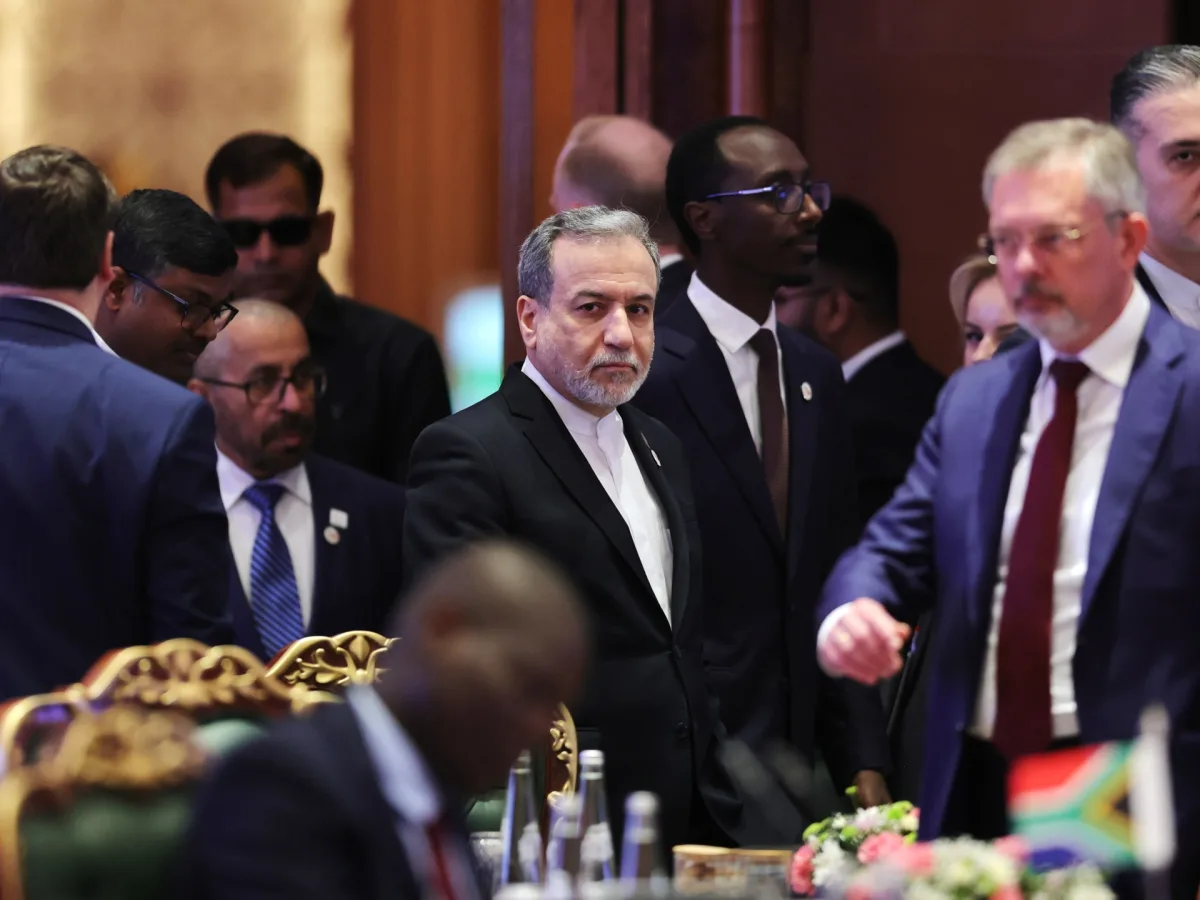
Iran's Foreign Minister Abbas Araghchi has expressed doubts about the US's seriousness in engaging in talks to end the war in the region. Araghchi made these comments at a media conference during a key BRICS meeting in New Delhi, India.
He stated that his government had received messages from President Donald Trump's administration indicating a willingness to hold new talks. Yet, Araghchi said, there's still a lot of distrust in Tehran about the US's intentions. The Iranian foreign minister emphasized that his country will proceed with negotiations only when they feel the US is serious and ready for a fair and balanced deal.
The nuclear issue, specifically Iran's enriched material, is a major point of contention. Araghchi confirmed that this issue won't be discussed immediately but will be addressed in later stages of any talks. He also mentioned that Iran may consider Russia's proposal to store the country's enriched uranium, but only at an appropriate time.
Araghchi had spoken to Russian officials about Moscow's offer and appreciates their efforts. He also expressed openness to support from other countries, including China, to help resolve the war. The closure of the Strait of Hormuz has damaged economies worldwide, and Araghchi values any assistance that can be provided, particularly from China, with which Iran has very good relations.
The Iranian foreign minister also criticized the UAE for blocking parts of a BRICS ministerial statement. He blamed the UAE's support for Israel and the US in their aggression against Iran for this action. Araghchi described this as very unfortunate.
The situation stands with few signs of a breakthrough in finding a solution to the war on Iran. Trump has been in Beijing for talks with Chinese President Xi Jinping, but so far, no significant progress has been reported. The distrust between the US and Iran, coupled with the complexities of the nuclear issue, makes the path to a resolution challenging.
We are in doubt about their seriousness, but the moment we feel that they are serious and they are ready for a fair and balanced deal, we will certainly proceed in the course of negotiations.
Araghchi's comments highlight the delicate nature of the negotiations and the skepticism that pervades the relationship between the US and Iran. The involvement of other countries, such as Russia and China, adds another layer of complexity to the situation. As the world watches, the hope is that a peaceful resolution can be found, but for now, the deadlock persists.
The BRICS meeting in New Delhi provided a platform for Araghchi to express Iran's stance and concerns. The grouping, which includes Brazil, Russia, India, China, and South Africa, has been notable for its economic and political cooperation. However, the challenge of resolving conflicts such as the one between the US and Iran requires more than just economic cooperation; it demands a deep understanding of the political and historical context of the region.
In this context, the role of countries like China becomes significant. China's relations with Iran are built on mutual economic and strategic interests. The potential for China to play a mediating role or to offer support in finding a solution to the nuclear issue can't be underestimated. Yet, the path ahead is fraught with difficulties, and the ability of the international community to navigate these challenges will be crucial.
For Iran, the stakes are high. The impact of the war and the sanctions has been felt deeply across the country. The economy has suffered, and the people have borne the brunt of the conflict. The desire for a peaceful resolution is palpable, but it's tempered by the distrust and skepticism that have built up over the years.
As the situation evolves, it's clear that the road to a peaceful solution will be long and arduous. It will require patience, persistence, and a genuine commitment to finding a fair and balanced deal. Whether the US and Iran can find common ground remains to be seen, but for now, the world watches with bated breath, hoping that a way forward can be found.
Key Facts
- Iran's Foreign Minister Abbas Araghchi expressed doubts about the US's seriousness in engaging in talks.
- The issue of Iran's nuclear programme will be addressed in later stages of any talks.
- Russia has offered to store Iran's enriched uranium.
- China's support in resolving the war is valued by Iran.
- The UAE blocked parts of a BRICS ministerial statement due to its support for Israel and the US.
The international community's response to the situation will be critical. The ability of countries like China and Russia to play a constructive role in finding a solution will be closely watched. For Iran, the hope is that a peaceful resolution can be found, one that respects its sovereignty and addresses its concerns. It's uncertain if this hope can become a reality, and the world will have to wait and see how the situation unfolds.
The negotiations between the US and Iran are not just about the two countries; they have implications for the entire region. The stability of the Middle East, the security of the Strait of Hormuz, and the global economy are all intertwined with the outcome of these talks. As such, the international community has a vested interest in seeing a peaceful resolution to the conflict.
The situation between the US and Iran remains complex and challenging. The distrust and skepticism that exist between the two countries make it difficult to find a way forward. However, with the involvement of other countries and the international community, there is still hope that a peaceful solution can be found. The world watches with bated breath, waiting to see what the future holds for this volatile region. The US and Iran's ability to find a resolution will depend on their willingness to compromise and work towards a mutually beneficial agreement.
It's a challenging task, but it's not impossible, and the international community will be watching closely to see how it unfolds.